The Exhibit Program Playbook
The chaos of one-off show planning stops here. See how to build an exhibit program that cuts costs, unifies your brand, and lets your team plan instead of react.

What’s an exhibit program and why does it matter?

The short version
An exhibit program, or exhibit program management, is a coordinated approach to your entire trade show calendar, managing assets, budget, and brand across the full year instead of solving each show as it comes. Without one, brands often overspend on rush charges and duplicate assets, lose track of what's sitting in storage, and show up inconsistently from show to show.
A real-world example:
Somewhere out there right now, there’s a brand director with a warehouse inventory spreadsheet in one hand and an event calendar in the other, trying to make them agree. Sure, the warehouse is packed with custom brand assets, but half are from an event program that ended last year, and the other half were built for a footprint size she won’t need until Q4.
If this sounds less like a hypothetical and more like a diary entry, this playbook’s for you. Drawing on eighty years of experience in the exhibit business, we’ll break down the warning signs of event-by-event thinking, the misconceptions that keep brand marketers and CMOs stuck there, and how to build smarter, more strategic exhibit programs.

Blink twice if you're trapped
What’s the “booth-by-booth” trap in trade show exhibiting?
The short version
The booth-by-booth trap is when a brand manages each trade show as a standalone project instead of as part of a larger program. Every show gets its own budget and creative decisions. Over time, costs accumulate in places nobody's tracking, and the brand slowly loses consistency across the calendar without anyone making a single "bad" decision.
Per-event thinking has a per-year price.
Most exhibit calendars run on a show-by-show basis. This show needs a 20x20. That show needs a 10x10. Another needs something fast because the timeline collapsed and the good options left the building three weeks ago. Each show gets its own budget. Its own timeline. Its own slightly frantic kickoff call.
The shows get solved, but the program never gets designed, because "the program" isn't anyone's job. And corporate accounting doesn't help. Budgets get approved per event. Vendors quote per event. So everyone ends up thinking per event.
Is your brand stuck in the booth-by-booth trap?
Take the quiz (we promise not to share your answers with your CFO).

Less booth-by-booth.
More program-by-program.
Rent vs. buy: how to think about your trade show exhibit assets
The short version
Owning makes sense when something gets used enough to pay off the build plus the storage, freight, and refurb. For highly active brands, custom can pay for itself in a matter of months. Brands with only a few shows a year have to stretch that math across several seasons.
Every piece earns its place.
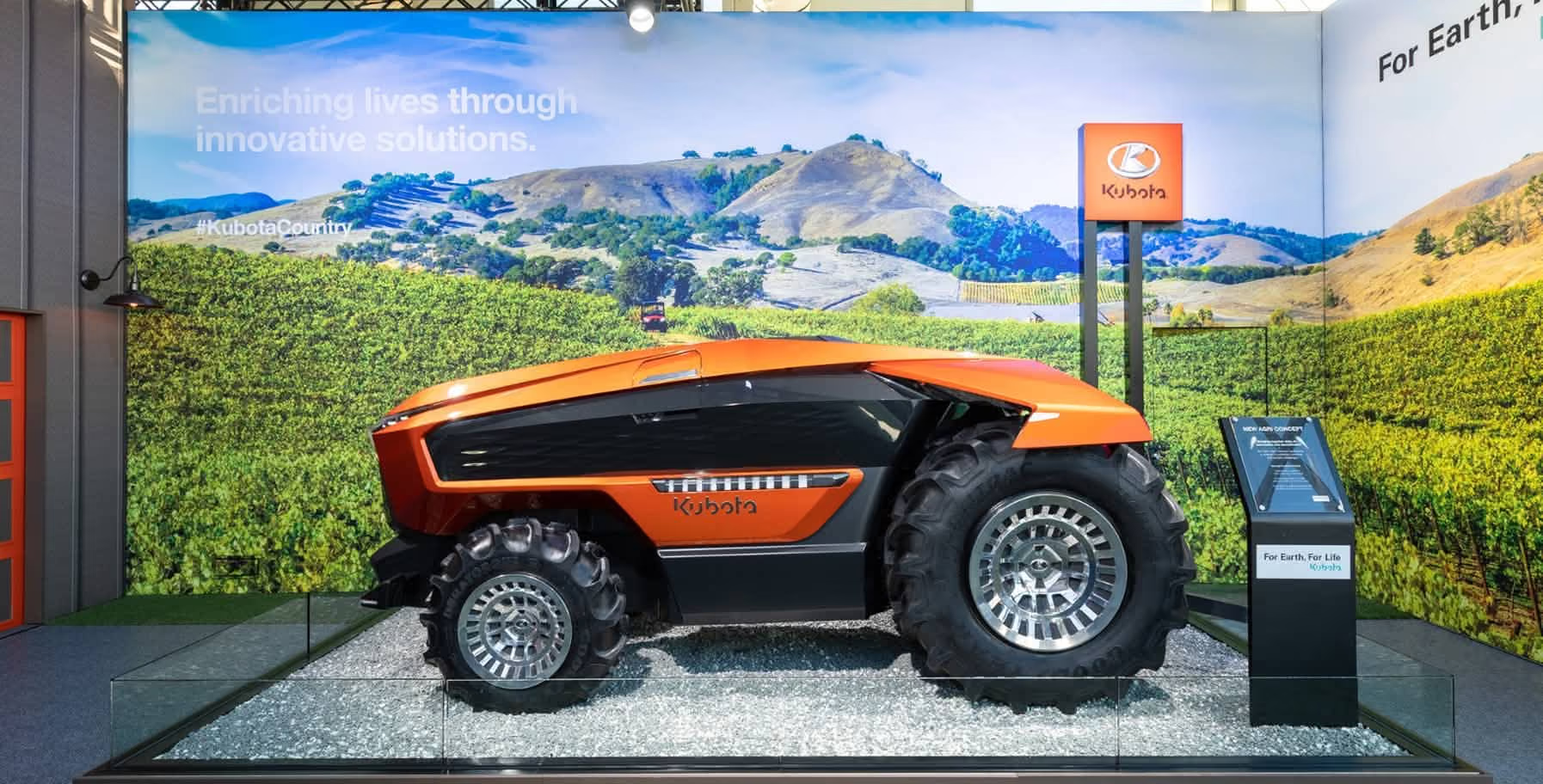
The answer is rarely “rent everything” or “own everything.” Most healthy programs land on a hybrid: a few owned hero pieces that carry the brand everywhere, with rented structure flexing around them, sized to whatever each show demands. Make the call asset by asset, across your whole calendar, and a trade show strategy starts to emerge.
Run it like a portfolio.
Once a year, pull utilization on every owned asset and let the data, not emotion, decide one of two things:
- It stays owned because it earned its keep (i.e., high use, stable footprint, long brand shelf life).
- It leaves the warehouse because a rental does the same job for less, or its show is over and it's never needed again.
The discipline is simply asking the question every year, asset by asset: Are you still worth more than it costs to keep you?
This isn't a fringe practice. The largest brands and exhibitors in the world live by these principles. We know because many are our clients.
Four things found in every well-run exhibit program:
Per-show costs are known in advance, not reconciled afterward.
Utilization is tracked per asset, so every item in the warehouse can justify its rent.
The mix of owned vs. rented is rebalanced once a year.
One partner can see, and quote, the entire calendar.
Smart People. Bad Assumptions.
What do brands get wrong about renting vs. owning a trade show exhibit?
The short version
Running an exhibit program is simpler than the industry makes it sound: know your per-show costs, track what each asset does, rebalance once a year. What often gets in the way is a set of deep-seated assumptions about rental versus custom, chief among them that custom is somehow superior.
Five questions that reveal a custom-exhibit bias:
After helping hundreds of clients stand up exhibit programs, we can hear a custom-exhibit bias from a mile away. Here are the questions that tip us off:
Aren’t custom exhibits the more serious choice?
No. About 70% of our clients build rental into their programs on purpose, not as a compromise.
There is a moment that happens in event planning meetings all over the country. Someone looks at the calendar, looks at the budget, and says, "We'll get a rental for this one," the way you'd say "We'll probably just have leftovers tonight." Like the booth's inadequacy is a foregone conclusion. But rental is what brands choose when flexibility is part of the strategy. Affordability often doesn’t factor in at all.
In the long run, isn’t it cheaper to own your trade show exhibits?
Sometimes. Owning is only cheaper when the asset works often enough to cover the costs that come with it.
A custom build that deploys constantly for years can come out cheap per show. Money well spent. But ownership travels with an entourage of costs: storage, freight, refurbishment, insurance, maintenance, and depreciation. Run the real total against actual utilization, and "always cheaper" collapses into "sometimes cheaper." The number CFOs will care about is cost per show. Purchase price, plus upkeep (e.g., routine updates, trade show exhibit storage costs), divided by the number of shows where the asset actually deploys. Renting quotes you that number up front, and owning reveals it at the end.
Can rental exhibits look as good as custom exhibits?
Yes. Proprietary rental systems now look indistinguishable from custom, and the seam between owned and rented has disappeared.
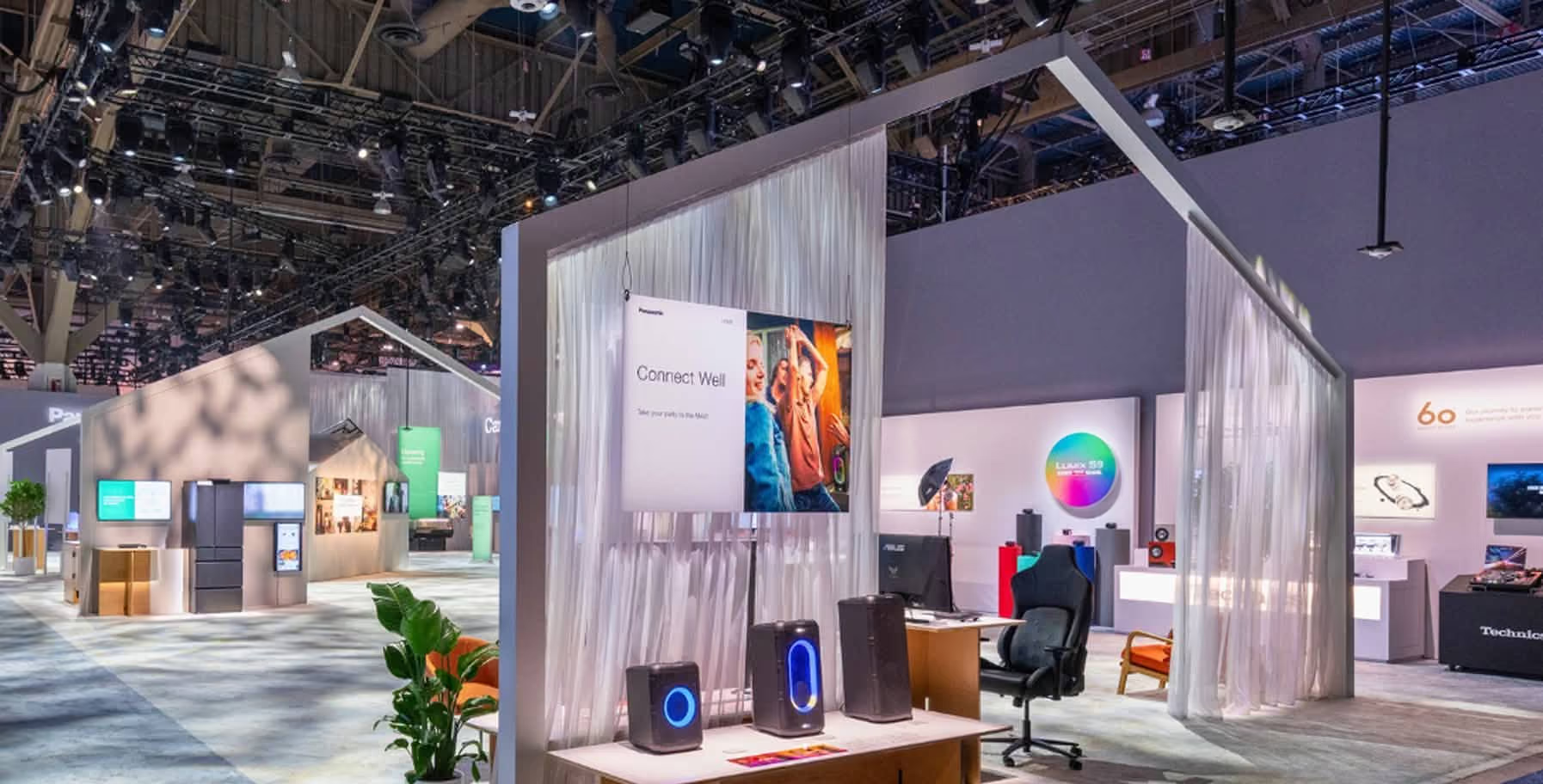
This was a fair question back in 2010. Every rental was the same aluminum extrusion and stretch fabric, your logo slapped on the same architecture as the booth next door. Today, the picture is different. Proprietary rental systems, designed and fabricated in-house rather than pulled from a universal catalog, span everything from a 10x10 inline to a 50x60 island. Custom brand elements integrate so thoroughly that visitors can't tell which walls you own and which ones go back on the truck. If a rental still looks like a rental, that's a vendor problem.
Isn't a custom build the best way to showcase our brand?
Not by default. In fact, brands that are highly invested in their identity tend to revise it every few years, and that’s a case for renting.
Can you name a Fortune 500 brand that hasn't tweaked its logo in the past five years? Brands that take their identity seriously keep refining it, and ownership is a bet that your calendar, your footprint, and your brand will all stay stable enough to justify the ongoing cost. The more alive your identity is, the shakier that bet gets. Renting keeps you current every cycle and scales your presence to what each show is actually worth. You can revise a custom build, sure. But you'll pay for the privilege every time, and the old version still sits in the warehouse, collecting rent.
Don’t all trade show rental vendors offer the same basic builds?
Many do. You can tell which ones by what they say before the quote.
Browse the category and you'll find the same conversation on a loop. Rentals "don't have to be boring." A rental "doesn't have to look like one." Renting "isn't just the budget option anymore." Every one of those sentences is an apology in hiding, and a vendor who apologizes for the product is usually pulling it from the same universal catalog as everyone else. So when a rental partner opens with a discount, believe them. They've just told you how they think about your booth. The better partners ask about your calendar, your warehouse, and your goals for the year before they price anything. A partner who starts with those questions is selling you real trade show program management. A partner who starts with a price is selling you a tent.
.avif)
.avif)
.avif)
Schedule your program audit
Bring us your calendar, assets and goals. We’ll help you see where to own, where to rent and where your exhibit program can work harder.
