The Insider Report | CES 2026
The Insider Report.CES 2026.
An inside look at the latest experiential marketing trends & designs at CES.
5 experiential trends
15 brands
20-min read
The Overview
Highlighting the essential stats, standout themes, and the ways CES continues to evolve alongside the brands shaping the experience.
2026 at a glance
CES continues to prove itself as a force in tech innovation and experiential excellence. Companies brought their A-game with product debuts spanning robotics, mobility, wearables, accessibility, energy, enterprise, entertainment and more.
As Consumer Technology Association CEO Gary Shapiro notes, CES remains "the world's most powerful proving ground for innovation." It's a top-of-the-year launchpad that sets the tone for the new year in four short days. This year, the competitive spirit was fiercer than ever as companies raced to show their potential.
The brand landscape of the show is undergoing a noticeable shift. We see many now prioritizing the meaningful few over the massive crowds, creating smaller, more intentional experiences while others seek to amplify their presence throughout the city. Some opted to shift off the show floor while others stayed home entirely.
New tech is chasing a new level of harmony
This year, technology moved from cognition to coordination. Products have moved beyond simply being intelligent and entered an era of integration. AI was no longer framed as a responsive layer reacting to inputs, but as an orchestrator connecting systems, environments, and experiences in real time. The emphasis shifted from "what a product can do" to how technologies collaborate, persist, and operate together across physical and digital contexts.
This evolution was visible across categories. LEGO's SmartBrick exemplified how even traditionally analog brands are embedding intelligence into modular systems, transforming static objects into responsive platforms that learn, adjust, and connect. Meanwhile, Zoox's cross-city presence reframed autonomy not as a contained demo, but as infrastructure; distributed, operational, and woven into the fabric of the city itself.
Belief is built through action
At CES, belief is the beginning of every serious conversation. This year, it became clear that progress, much like people, is judged not only by what it can do, but by how it behaves when introduced to others. Innovators armed themselves with impressive facts and figures, and rightly so. After all, an invention without proof is merely a pipe dream.
However, the wisest companies knew that belief is not built by shouting credentials, but by giving small, convincing demonstrations of character. A robot boxing demonstration showcasing the power of AI stabilization was far more believable than promo videos. The cleverness lay not in hiding the mechanics, but in presenting the technology in a familiar human context.
In this way, utility and affinity did not compete for attention. One proved the invention was capable, the other that it was worth believing in.
CES by the Numbers
CES is the world's largest tech show for a reason. Each January, technologists, business leaders, entrepreneurs, and media converge to explore new breakthroughs and see where innovation is headed next. The event experienced consistent, steady growth compared to the previous year, building on past momentum. This progress allowed CES to reach a broader and more diverse audience than before.

The Rundown
CES by the Numbers
CES kept growing in 2026, reaching a broader and more diverse audience than before. Here's the scale of the world's largest tech show, at a glance.
People
148K
Total attendees
Technologists, business leaders, entrepreneurs and media, all under one roof.
Scale
2.6M
Square feet of show floor
That is roughly 45 football fields of exhibits.
Scale
4100+
Exhibitors
Scale
1.4K
Startups
Stage
1300+
Speakers
Stage
400+
Conference sessions
People
7K
Global media attendees
Buzz
10K
Social mentions per hour
That's about 167 every minute.
Figures from The Insider Report, CES 2026. Football field and per-minute comparisons are approximate.
Section 02
The Trends
Breaking down five trends shaping the next era of brand engagement, each backed by the surprising moves and strategic shifts brands made in the exhibit hall and far beyond.

Hook, Line + Substance
A flashy feature might pull people in, but what happens when the spectacle outshines the experience? The real challenge is being intentional about what's on the hook. Once you reel people in, you have to deliver a story worth staying for. CES is overflowing with must-have swag, mechanical marvels, and jaw-dropping displays. For companies looking to truly resonate, drawing attention is only the first step. The standouts delivered substance to match the spectacle.
Example 01 · Panasonic
Curiosity compels a closer look
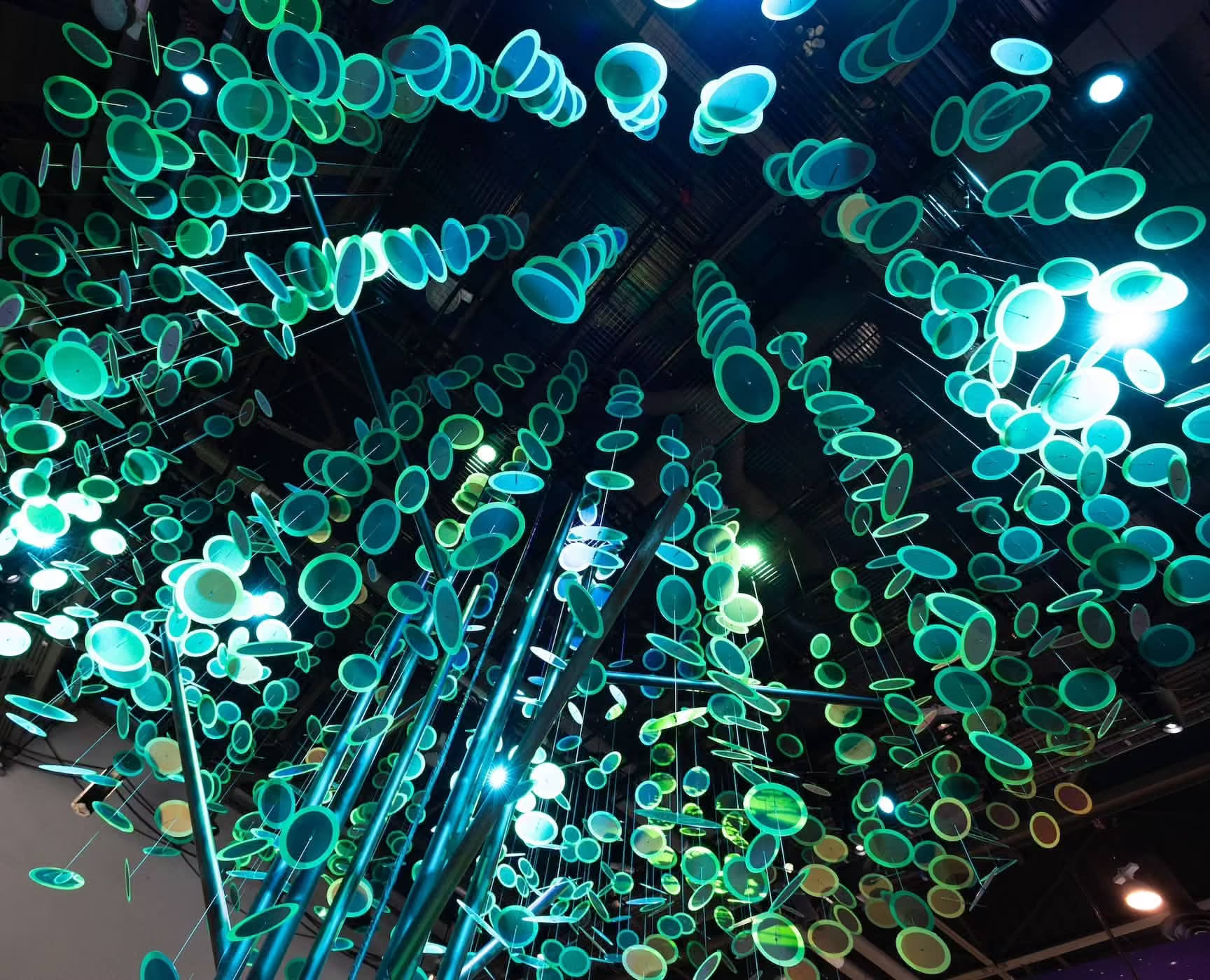
A visible queue outside a semi-exclusive exhibit acts as its own marketing, amplifying demand. Panasonic leaned into this notion with a walled-garden environment that sparked curiosity and gave the brand full control over how their story unfolded.
Immersive
By admitting small groups on a set cadence, they engineered a shared "wow" moment inside a 360 theater that showcased the company's legacy and latest innovations. Visitors then emerged into a refreshingly open space, free to explore content at their own pace without battling crowds.
Interconnected
Three distinct zones demonstrated how Panasonic uses AI to enhance the ways we Optimize, Safeguard, and Live our lives. A central data hub represented how all of these are inherently connected, illustrating how Panasonic's technology powers a smarter, safer, more efficient future.
Interactive
Before exiting, guests were invited to take a photo and leave their mark at the "MAKE" experience, contributing ideas for the future we can build together on dimensional letters for a chance to win exciting giveaways.

Example 02 · Brunswick
Reeling 'em in
Six years at CES and Brunswick finally launched a boat from the show floor. A first-ever launch demanded more than machines making waves. Small refinements added up: opening the entrance for better sightlines, adding a water fountain that brought crowds into Brunswick's native environment before they stepped inside. Then the threshold moment: a boating dock led visitors directly to the Sea Ray SLX 360, already docked to reinforce the vessel's autonomous docking capabilities. From there, the dock guided visitors toward AI-powered simulators, turning spectacle into sustained engagement.

Example 03 · John Deere
Harvesting attention
John Deere has never hesitated to use CES's biggest equipment to draw a crowd. This year, the brand showcased the integration of heavy machinery and next-gen technology. The centerpiece was a massive harvester that used an LED floor and a custom "digital crop" cylinder to demonstrate how automation and connectivity address labor shortages in the farming industry. Beyond the main display, the booth engaged visitors with a full-size simulator, scale demos, and a line of attendees eagerly waiting to snag an iconic John Deere hat.
Earning the Experience
CES 2026 subtly redefined what "open" means on the show floor. Instead of maximizing accessibility, several brands used intentional friction such as physical barriers, appointment-only access, and controlled entry points to shape perception and elevate the experience. Closed or semi-closed environments signaled a focus on engagement over volume, while off-site locations demanded intention and time. Together, these approaches revealed a shift: access itself became a brand signal. The most memorable experiences were the ones that made entry a conscious choice.
Example 01 · Samsung
Bold moves can create powerful gravitational pulls
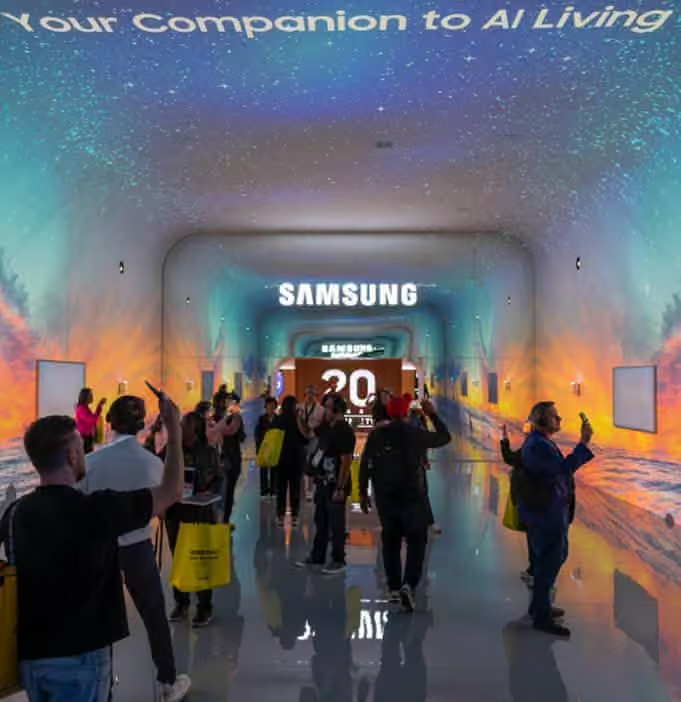
A CES veteran with decades on the show floor stepped off it entirely. With a standalone exhibition hall for their AI ecosystem experience at the Wynn Hotel, Samsung's "The First Look" opened with a media-only preview before offering two days of public access. The twist? Attendees had to track down an off-site QR code, register in advance, and select a time slot.
Taking an RSVP-only, off-site approach allowed Samsung to deliver a more intimate narrative to a more invested audience. The experience began in an enclosed atrium that felt like anything but a hotel ballroom. Vivid projection displays transported attendees into a futuristic world before they even stepped into the showcase areas.
AI Gallery Zone
An entry that demonstrated how AI can enhance creativity and expression through reimagined classic works.
Entertainment Companion Zone
A showcase of AI-powered viewing and listening, highlighting more intuitive and immersive entertainment experiences.
Home Companion Zone
AI-driven appliances and systems designed to minimize everyday tasks and move toward a "zero-housework" home.
Care Companion Zone
A wellness ecosystem where mobile, wearable, and in-home devices support sleep, cognitive health, safety, and pet care.
Example 02 · Lenovo
Extending the narrative
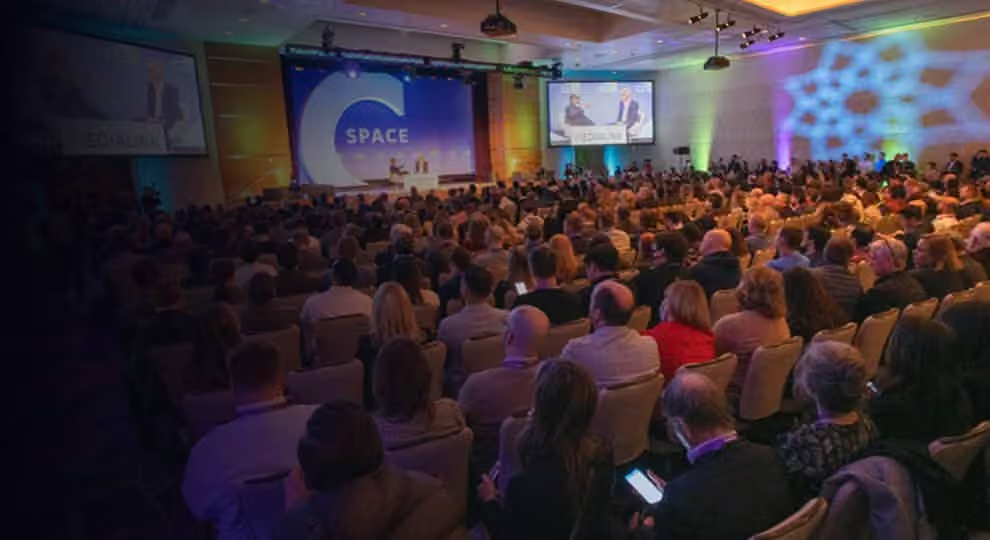
Lenovo brought a deliberately distributed and thoroughly ambitious approach to its CES presence this year, anchored in moments designed to command attention where it mattered most rather than in one single experience. That ambition came into sharp focus with Lenovo Tech World, a self-sustained keynote held at the Vegas Sphere that, despite early skepticism, drew thousands away from the CES floor. Lenovo used the moment to reinforce a grounded message: that the future of AI will be defined by how effectively it can be built, deployed, managed, and scaled over time. This same philosophy of scale echoed across the brand's broader CES presence, from city-scale digital billboards to contextual touchpoints that extended the narrative far beyond the convention hall.
Example 03 · Hyundai
Setting the pace
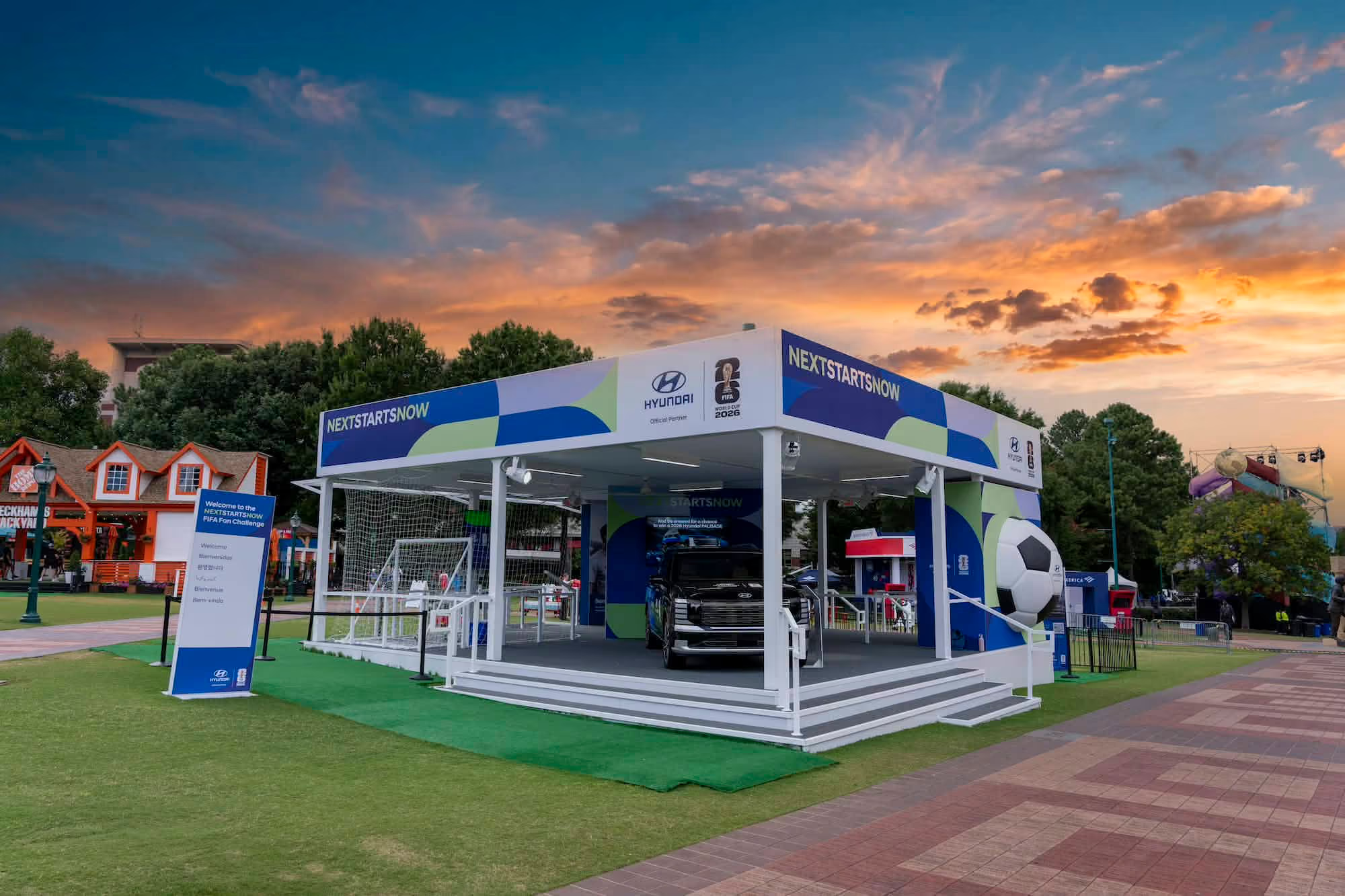
Hyundai established a veritable fortress at the center of West Hall, positioning itself squarely among CES's mobility leaders. (Would you believe that the exterior warehouse-like wall of corrugated steel is actually fabric?) With a single point of entry and exit, the space functioned as a gated experience, carefully paced to prevent crowding and heighten anticipation. Inside, the environment told the story of Hyundai's new North American manufacturing facility, translating the scale and ambition of the factory into an immersive narrative. Green energy systems, automation, and advanced robotics took center stage, illustrating how the facility operates at peak efficiency through a living vignette that championed partnering with human progress.
Stories You Step Into
For brands, CES represents more than an event on the annual marketing calendar: it's an opportunity to start the year by making a statement on one of the world's most innovative stages. With stories at their core, narrative environments paint with metaphor made visual, build with emotion made tangible, and are the surest way to ensure your audience remembers your brand long after the show is over. The most compelling stories told at CES this year unfurled through the subtleties: the finer details, the time taken to pause and take it all in, and of course, the visual components that speak volumes when words simply can't suffice.
Example 01 · BMW
Going off the beaten path
Flashing LEDs, dancing robots, and nonstop stimulation inside the convention halls left CES attendees in need of a moment to recharge. And just outside of the show floor frenzy, BMW came to the rescue. In their longtime Central Plaza spot, the exhibit has become a recognized respite where visitors can kick back among the automaker's latest vehicles. Interactive vignettes highlighted the debut of the iX3, while lounge seating, a full-service coffee bar, and a DJ enhanced the atmosphere. Additionally, guests were delighted by an AI-powered digital experience in which their name and face appeared on a massive LED animation showcasing BMW's evolution over the years.
Example 02 · Clarios
Highlighting the hero
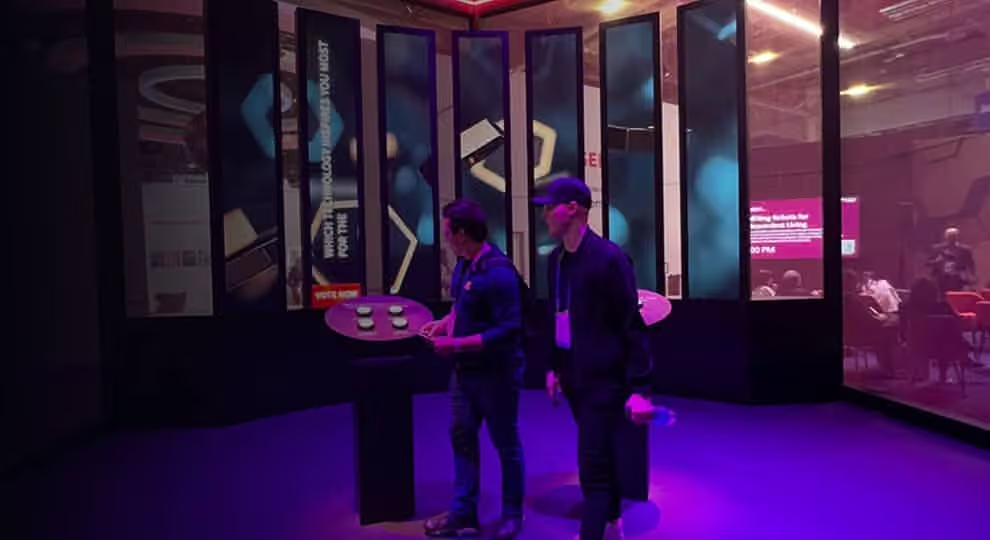
If your booth features a Lamborghini Huracán Sterrato as its protagonist, one would imagine you have something big to say. Rather than leaning into long copy on static walls, the Clarios experience wove its story with light, motion, and color, all placed strikingly against a blacked-out backdrop befitting of Tron's Grid. With the press of a button, the car was showered with a cascade of light from the hanging sculpture above it, calling to mind the sense of transformation and evolution that embodies the Clarios vision. One rare instance of Clarios's story told through words could be found on the plaque placed at the art car's forward angle, stating simply that Clarios provides the low-voltage batteries that power one in every three vehicles globally. Talk about a power play.
Example 03 · LG
Stories worth staying for
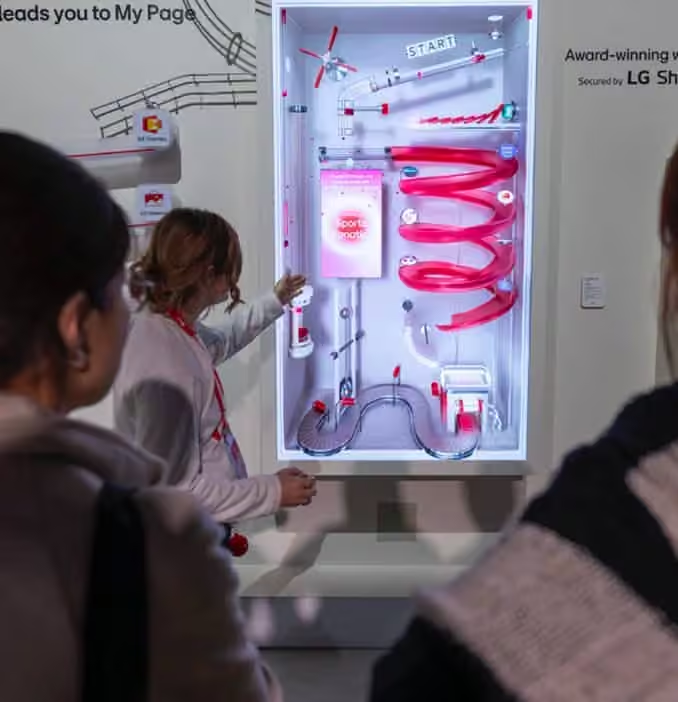
LG recognized that today's AI skepticism comes from an inability to imagine living with the technology, rather than unfamiliarity with it. So instead of showcasing isolated innovations across product categories, LG built a single spatial story under the theme "Innovation in Tune with You," where AI disappears into harmony rather than demanding center stage. What followed was five distinct environments where physical and digital engagements merged to make abstract AI promises suddenly tangible.
Viewing in Tune
Attendees selected their genre preferences, triggering a Rube Goldberg chain reaction resulting in a personalized profile.
Ride in Tune
Guests experienced cabin technology first-hand for sensing the driver's emotional state and expanding their road perception.
Entertainment in Tune
The experience featured an Elden Ring-themed gaming sanctuary co-designed with Reddit users, plus daily broadcasts hosted by will.i.am.
Living in Tune
LG's home robot, CLOid, anticipates needs around the home, complementing the household rhythm rather than disrupting it.
In Tune for Everyone
LG closed its story with sculptural trees made from recycled cardboard, each representing LG's commitment to the environment.
Partnership as Proof
Brands capitalized on the worldwide platform CES offers to highlight their current and upcoming collaborations. By incorporating globally recognized IP or major entertainment and cultural entities into their presence, companies were able to set themselves apart from competitors and strengthen their cultural relevance. This built awareness among attendees and press while boosting excitement around their initiatives. Those drawn to these activations were exposed to what's new and upcoming, while also seeing product performance demonstrated in real-world scenarios relevant to them as consumers.
Example 01 · Hisense
Strategic plays turn sports fandom into brand fandom
Hisense highlighted its long-standing FIFA partnership ahead of the upcoming World Cup by making a soccer-themed "Fan Zone" the heart of its exhibit. Following last year's World Cup trophy reveal at CES, the brand turned up the energy by transporting attendees to the center of the action. With interactive games like shootout duels, photo-op moments, and a merch hub stocked with match-day gear, Hisense promoted its Elite Collection for FIFA World Cup 2026 and demonstrated how its technology brings the world's biggest sporting moments straight into the home. By spotlighting this partnership, the brand reinforced the inseparable link between sports and home entertainment.
Example 02 · TCL
Integrating interactives
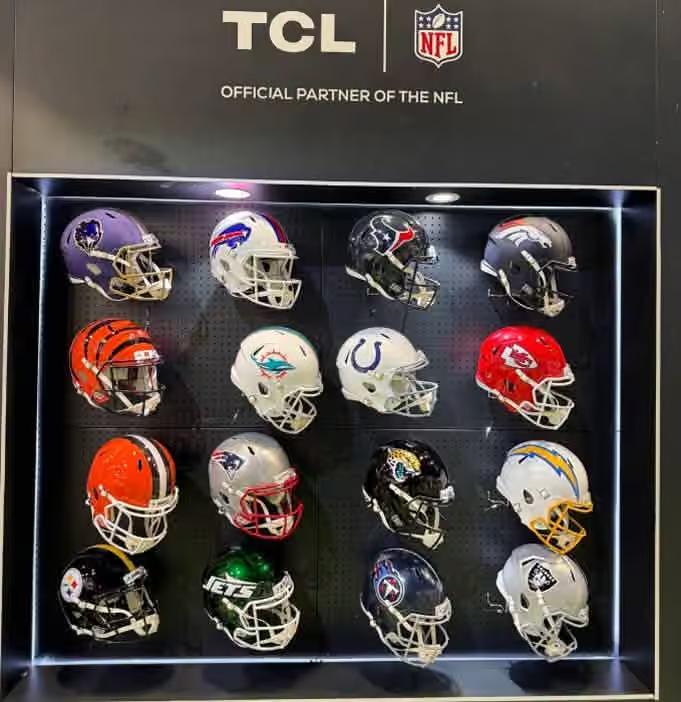
TCL also leaned into its sports collaborations, using real-world content to demonstrate the power of its LED technology. The story was amplified through high-profile partnerships and brand integration with entities such as the Olympics and the National Football League. These elements reinforced TCL's positioning as a technology brand that brings fans closer to the sports they love, translating elite athletic performance into an equally elite viewing experience. A hands-on football experience blended physical and digital touchpoints, allowing attendees to step onto a simulated field, throw real passes, and feel the thrill of game-day performance.
Example 03 · Amazon
Sharing the spotlight
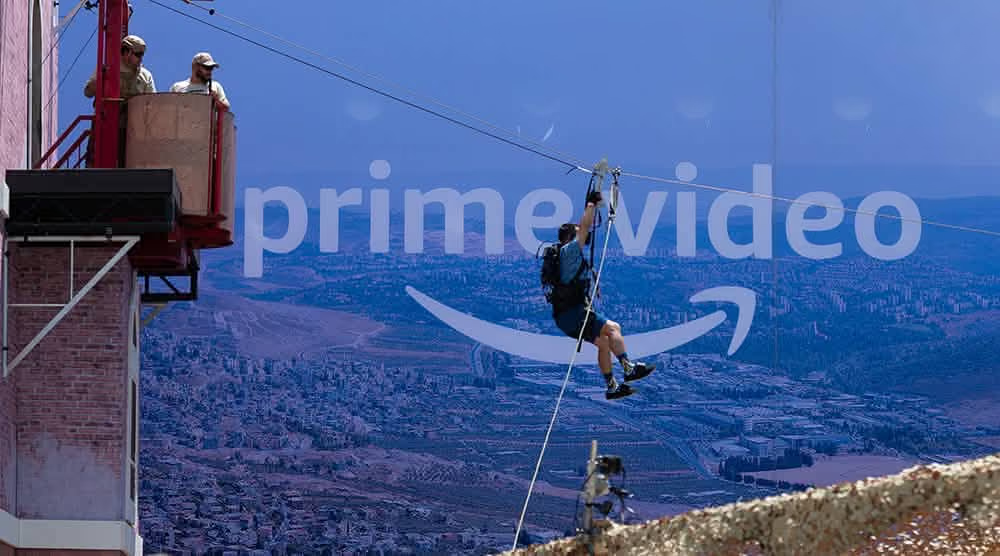
Amazon Automotive showed us what a partner-forward booth looks like, giving brands like Siemens, Nvidia, and F1 dedicated engagement space alongside their solutions. Their "Real-Time Race Track" activation showed what happens when two brands start talking. Attendees drew their own circuits, watched Amazon Nova generate top speeds and race strategies, then took their creations for a spin. The partnership created a memorable, personal experience where F1 delivered the adrenaline and Amazon delivered the tech, sparking a new kind of conversation.
Firing on All Senses
The branded spaces remembered days after CES aren't always the loudest. They're the ones that made you pause before you understood why. A familiar scent. A shift in temperature. A sound bed that fit the environment. These brands treated sensory cues as a quiet layer beneath the main show, reinforcing the story rather than competing with it. On a crowded floor, autopilot takes over. Experiences blur together. The smartest brands let feeling arrive before meaning, leaving impressions that outlasted yet another dancing robot.

Example 01 · Kubota
Immersive elements unlock a whole new world
Kubota opted for a smaller footprint this year, demonstrating that multisensory strategy works at any size when it surrounds visitors in atmosphere aligned with the brand. Rather than simply showing products, they invited attendees to step into their universe. Through a blend of sensory elements, the brand created an environment that instantly evoked the spirit of working the land.
Scent
The scent of fresh-cut grass grounded the experience in working fields, triggering memory faster than any visual.
Sight
Vivid video footage pulled attendees off the show floor and into Napa vineyards, while neon orange lighting framed the KVPR in a brand-forward glow.
Touch
A digital twin touch table gave visitors tactile entry into the equipment's capabilities.
Sound
A custom soundscape filled the ambient space, interspersed with live speaker sessions to strengthen the innovation story.

Example 02 · Waymo
Sensing is believing
Autonomous driving asks people to trust technology they'll never see or touch. Waymo flipped that barrier into a booth strategy, creating an attendee journey that felt playful and genuinely informative. Bubbles and mist sprayed into the crowd to show how the vehicle detects weather and obstacles. Sound domes created pods where directional audio delivered rider testimonials, building proof through social feedback. A colorful kiosk let visitors press a button and see what pin emerged, a mystery box moment that turned giveaways into small discoveries.
Example 03 · Bosch
Inspecting the unexpected
Bosch used sensory cues as an invitation to explore what might have been just another industrial booth. They leaned fully into the "Like a Bosch" campaign with wrestling characters, ninjas, and vertical LED screens that commanded attention before anyone knew what they were looking at. The draw was live cooking shows featuring celebrity chefs from Top Chef running five performances daily, while a dishwasher display made of noodle-like sponges begged to be touched. Visitors stopped, reached out, and suddenly found themselves discussing AI-powered cooking solutions.

Keep exploring
More from our team on making the most of the world's biggest tech stage.