Let's talk about a number: 60 percent.
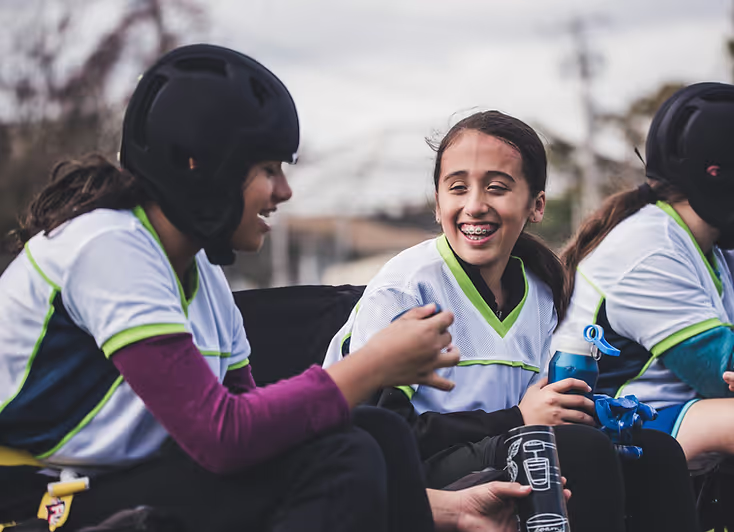
That's how much girls' high school flag football participation grew in a single year. One year. 68,847 girls on the field in 2024-25. The NFHS called it the biggest gain in all of high school sports. We'd call it a signal flare.
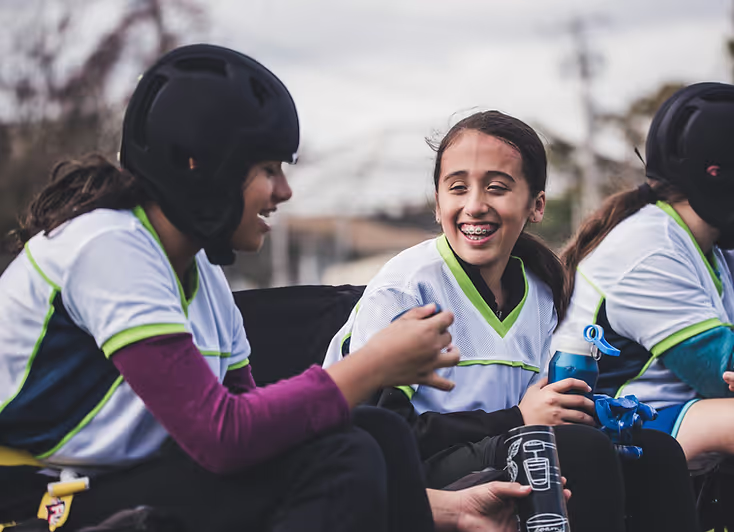
Zoom out to the youth level and the picture gets even louder. According to USA Football, between 2015 and 2024, the number of girls ages 6 to 12 playing flag football grew 283 percent, crossing 144,500 participants. And more than 267,200 girls ages 6 to 17 played flag in 2024. That's a decade of compounding momentum pulling toward one very obvious conclusion: this sport has a real, growing, loyal audience. And most brands haven't figured that out yet.
The Bigger Picture
Girls' flag doesn't exist in isolation. It's the grassroots edge of a much larger wave: women's sports viewership, fandom, and economic weight hitting levels the industry spent a long time underestimating.
Nielsen dropped some numbers in early 2026 that deserve a full read: 46 billion minutes of women's sports consumed in the U.S. in 2025. The WNBA delivered its most-watched season ever, 220 million hours, up 16 percent year-over-year. The NWSL Championship on CBS drew 1.18 million viewers, a league first, with a 70 percent surge among 18-to-34-year-olds. NCAA softball. Women's tennis. Little League Softball. Record after record.
An audience that was always there, always passionate, is now making itself impossible to ignore in the language business actually listens to: viewership data, sponsorship dollars, and sold-out venues.
Where the Opportunity Lives
Flag football is still in its build phase. Leagues forming, schools adding programs, families investing in gear and weekends organized around a sport their daughters are genuinely obsessed with. The experience layer, the activations, the brand environments, the fan moments that turn a sport into a culture, are anyone’s game.
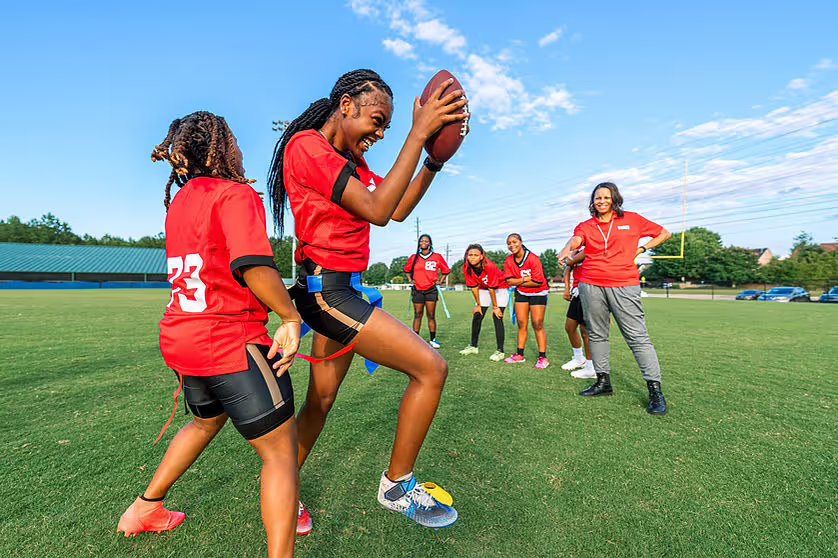
Right now, a 12-year-old showing up to her first organized flag game walks into a folding table, a volunteer with pinnie jerseys, and a sideline with maybe a popup canopy if a parent remembered to bring one. The ceiling for what this experience could be is so high you'd need a drone to see it. Brands that close that gap aren't just doing so out of the kindness of their hearts; they're writing themselves into a founding story and founding stories compound.
The kid playing flag at 12 is the season ticket holder at 32, and she remembers exactly which brands treated her like an audience worth designing for before she had a credit card. That's the experiential ROI that doesn't show up in a post-event recap deck but absolutely shows up in a decade of brand affinity data.
The leagues and federations building girls' flag are managing growth well, but they're shopping for partners who get it. Who see past the jersey sponsorship patch and templatized sideline banners and come in with a real point of view on experience: what it feels like to walk into that venue, to celebrate a first touchdown, to leave with something worth posting.
The field is open, but it won't be after flag football heads to the 2028 Olympics. The brands moving now have a chance to shape the culture early. Connect with our team to be one of them.