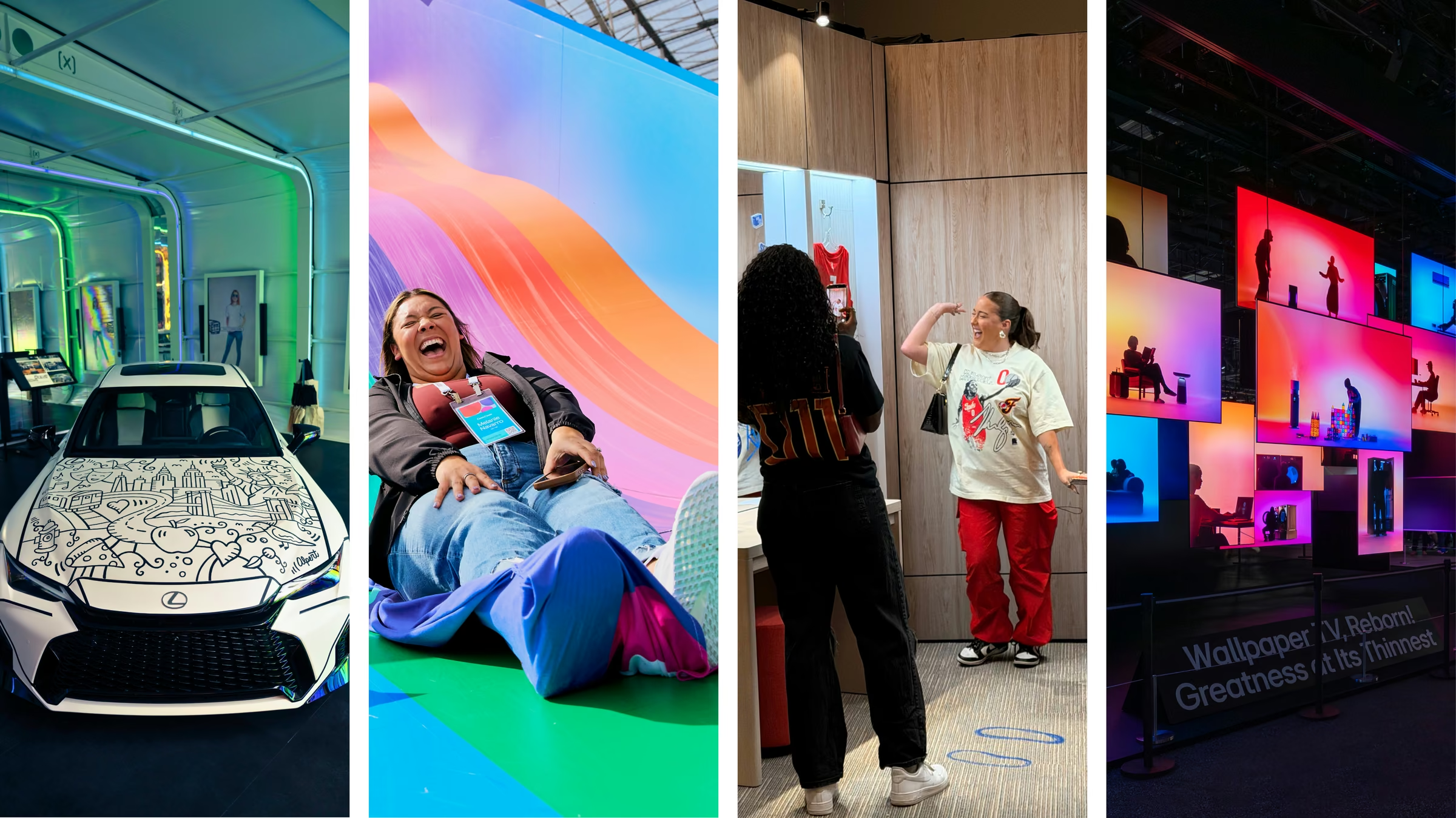
Czarnowski Collective’s 2026 work brought live art to Times Square, turned a software platform into a physical playground, and a whole lot more. These four experiential marketing examples for Lexus, Canva, Sequel and LG show how the ideas took shape, what visitors experienced and the results that followed.
Key takeaways
- Lexus built the entire experience around one guest journey. Programming changed throughout the day, giving people a reason to arrive, stay and come back.
- Canva and LG treated their spaces like functioning venues. The strongest brand activation examples gave different products and stories distinct roles within one cohesive experience.
- Sequel and Lexus built measurement into the idea early. Gated entry, location data, dwell time and social performance made results easier to see once the doors opened.
Lexus at NYCxDESIGN: Give guests a reason to stay

Czarnowski Collective built a six-day Lexus pavilion in Times Square for NYCxDESIGN. Artist Alex Alpert painted a Lexus live in front of the crowd, while CALTY designers held talks and smaller sessions with students.
The programming put the design process within reach of visitors. They could watch it happen and hear from the people behind the cars. A changing schedule gave them reasons to stay and something new to come back for.
Even better, the numbers backed it up. For teams wondering how to measure ROI on experiential marketing, the project offers useful benchmarks for attendance, dwell time and media response.
Proof: The pavilion welcomed 7,100+ visitors, who stayed an average of 67 minutes. It generated 57 million in potential reach, 2.1 million social impressions, 27.1K engagements and $5.7 million in earned media value. Location data ranked it New York City’s #1 event space for May.
See the full Lexus NYCxDESIGN pavilion and more event marketing examples from Czarnowski Collective’s automotive event marketing work.
Canva Create 2026: Turn the product into the venue
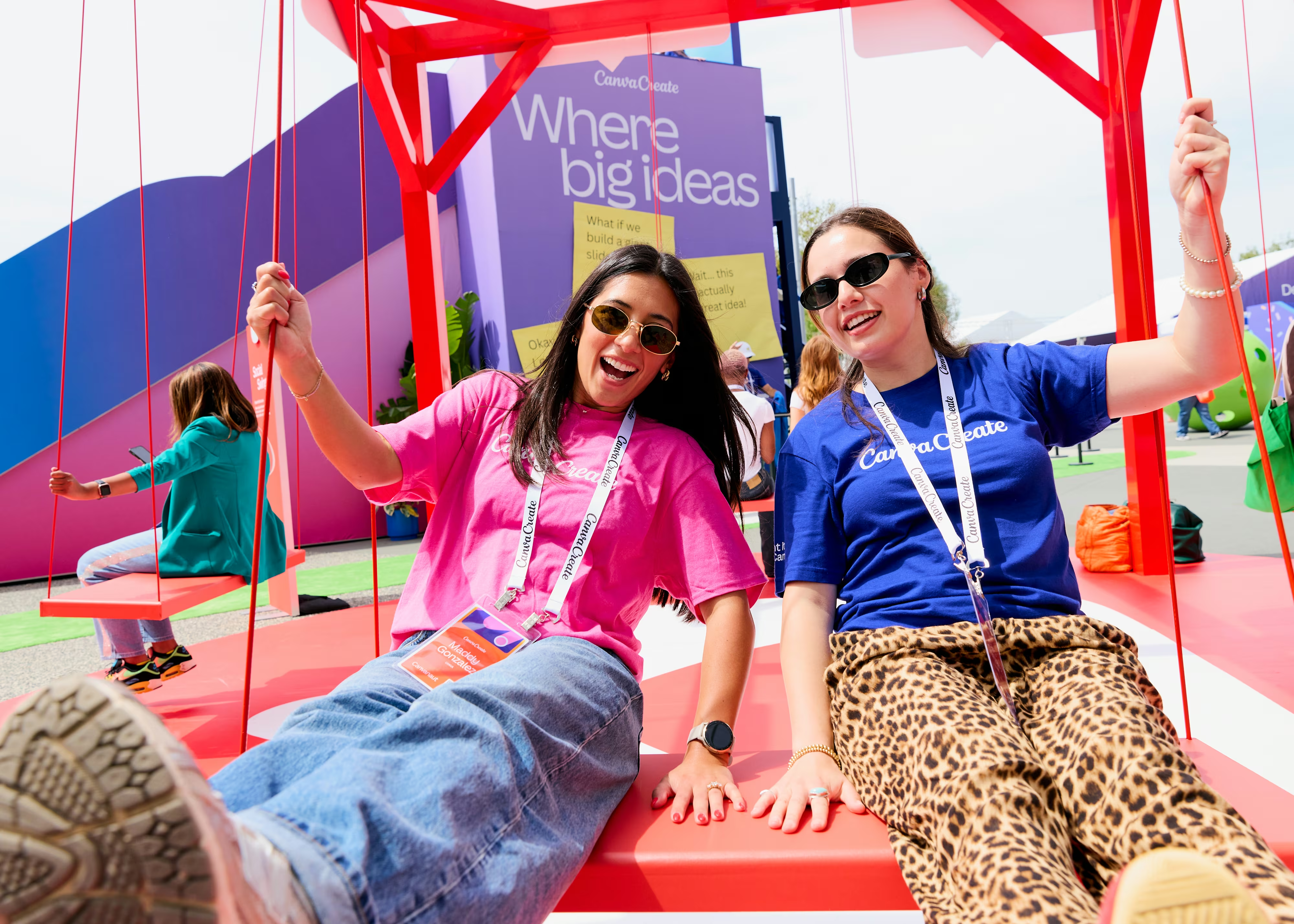
A product conference gets more useful when attendees can experience the product instead of only hearing about it. At Canva Create 2026, Public School—in partnership with Czarnowski Collective—turned Canva's digital tools into physical spaces people could walk through, interact with and use together.
In the agency's third consecutive year producing Canva Create, Hollywood Park became a physical extension of the platform. The Product Playground translated presentations, docs, video and social tools into interactive environments.
Canva AI 2.0 got its own remix studio. Attendees selected prompts, generated designs and refined their work alongside Canva experts, turning an emerging product into a hands-on collaborative experience. Canva Originals added a retail component, while live design moments and playful installations carried the brand across the campus.
As brand activation ideas go, this one had a simple organizing principle: the product itself. Each element felt different because it demonstrated a different part of Canva, while the overall experience still read as one brand.
Proof: Canva Create welcomed about 5,500 attendees, generated $3 million in sponsorship sales and sold $75,000 in merchandise. Attendance and sponsorships both grew year over year.
BizBash also went inside the production of Canva Create 2026, including the roles behind the experience.
See the full Canva Create 2026 experiential marketing case study.
Sequel at the Indiana Fever Spotlight Game: Give participation a purpose
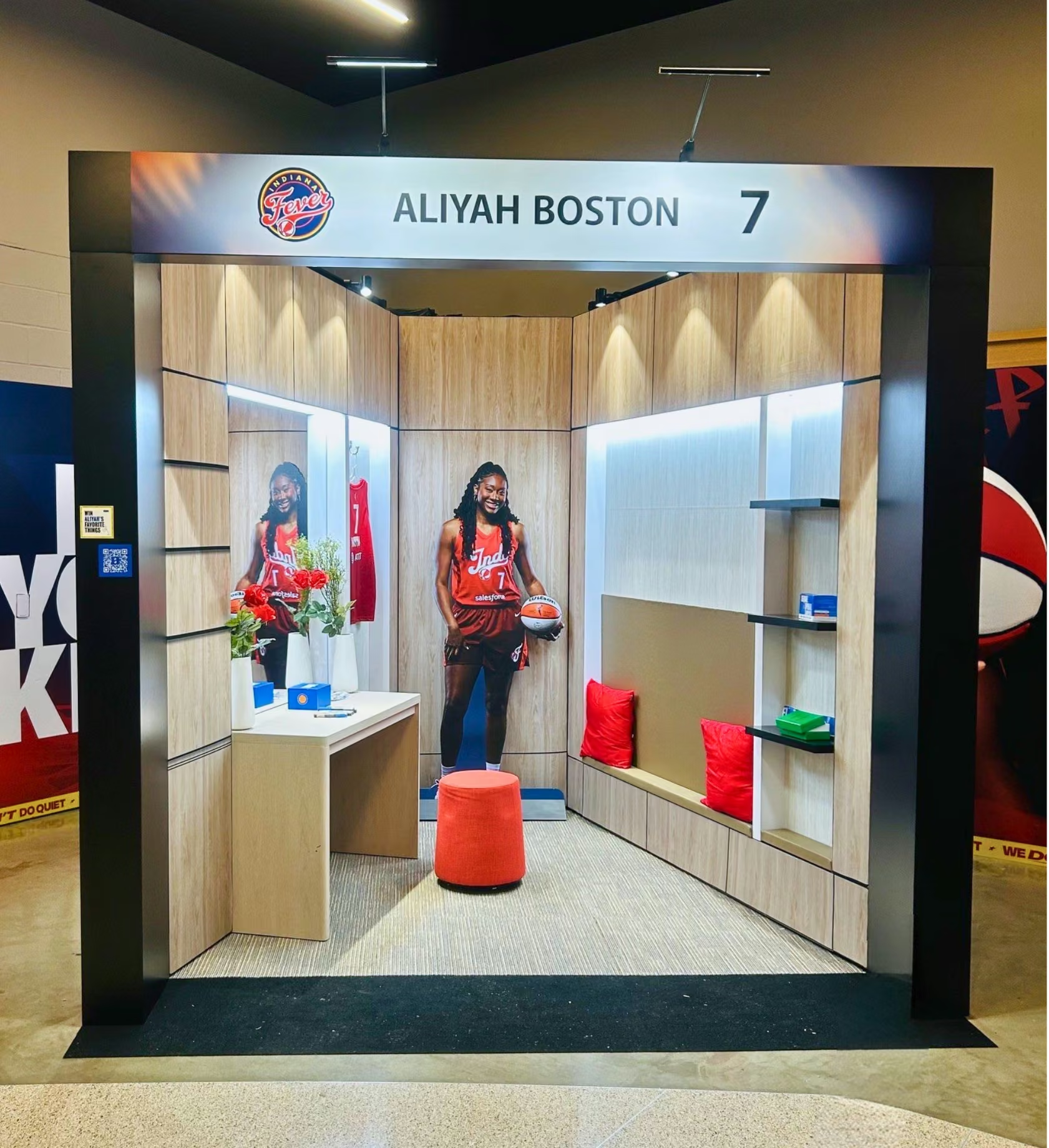
A brand activation earns attention in a crowded arena concourse when participation feels native to the event. For Sequel's Indiana Fever Spotlight Game, Czarnowski Collective built the experience around star center Aliyah Boston and gave fans a reason to interact before, during and after they reached the space.
The team recreated Boston's locker room in the main concourse of Gainbridge Fieldhouse, complete with her jersey, adidas sneakers, Sequel products and a lit mirror selfie spot.
Then the team put everything in it up for grabs through a digital, instant-win mystery box game. Fans scanned a QR code, picked a box and found out on the spot whether they had won one of Boston's favorite things. Signage and jumbotron creative carried the same QR code everywhere fans were already looking.
Most winners picked up prizes at the locker room, so the digital interaction drove physical traffic. Entries were gated, giving Sequel first-party fan data it could use after game day.
The mechanic connected product, athlete and fan behavior in one system. A line started forming 90 minutes before tip-off.
Proof: The activation reached a 16% fan participation rate, distributed about 5,000 Sequel boxes and generated 200K social impressions, 3.7K engagements and 226 comments.
Forbes covered the activation alongside the announcement that Boston had joined Sequel as a co-owner.
See the full Sequel Indiana Fever activation.
LG at CES 2026: Make a massive product story easy to navigate
-01.jpeg)
The trade show booth examples worth studying make complicated product portfolios easier to understand. At CES 2026, LG had an enormous ecosystem to communicate, and Czarnowski Collective's role was to translate that creative ambition into a physical environment that stayed clear, precise and on schedule.
As LG's production and execution partner, the agency handled technical planning, fabrication and installation while refining the build for safety, durability and performance.
The final exhibit organized LG's portfolio into distinct zones. OLED wallpaper TVs opened the visitor journey in the Viewing zone. The LG Gallery shifted into a museum-like presentation. The Ride zone focused on AI-powered in-vehicle technology, while other areas covered entertainment, accessibility, speakers and robotics.
That organization gave individual products enough room to make sense while keeping them connected to a larger LG story. It also made an enormous footprint easier for attendees to navigate.
Proof: EXHIBITOR Magazine ranked LG #3 in its Best of CES 2026 awards and credited Czarnowski Collective, listed as Czarnowski Display Service Inc., for design and fabrication.
See the full LG CES 2026 exhibit, or dig into more of the signals from the show floor in the agency's CES 2026 Insider Report.
Experiential Marketing Examples: 2026 at a Glance
The best brand activations of 2026 solved different problems. What they share is a visible line from the idea to the audience behavior to the result.
- Lexus NYCxDESIGN pavilion: multi-day brand experience at NYCxDESIGN. Used rotating cultural programming to drive sustained engagement. Result: 7,100+ visitors, 67-minute average dwell time, $5.7M earned media value.
- Canva Create 2026: brand conference at Hollywood Park. Turned Canva's digital product ecosystem into a physical playground. Result: about 5,500 attendees, $3M in sponsorships, $75K in merchandise sales.
- Sequel Indiana Fever activation: sports brand activation at the Indiana Fever Spotlight Game. Connected athlete affinity, digital participation and a physical locker-room experience. Result: 16% fan participation, 200K social impressions.
- LG CES 2026 exhibit: trade show exhibit at CES 2026. Organized a broad product ecosystem into distinct visitor zones. Result: #3 on EXHIBITOR Magazine's Best of CES 2026 list.
The best experiential marketing campaigns start with the audience behavior a brand wants to create, then build the physical, digital and operational pieces around it. These experiential marketing examples took very different forms, but each connected the build to a specific job.
Explore more of our experiential marketing work or talk to our team about what your next experience needs to do.
About Czarnowski Collective: Czarnowski Collective designs, fabricates and produces exhibits, events, environments and brand experiences through its studios: Czarnowski, Public School, Infusion and assembly.