
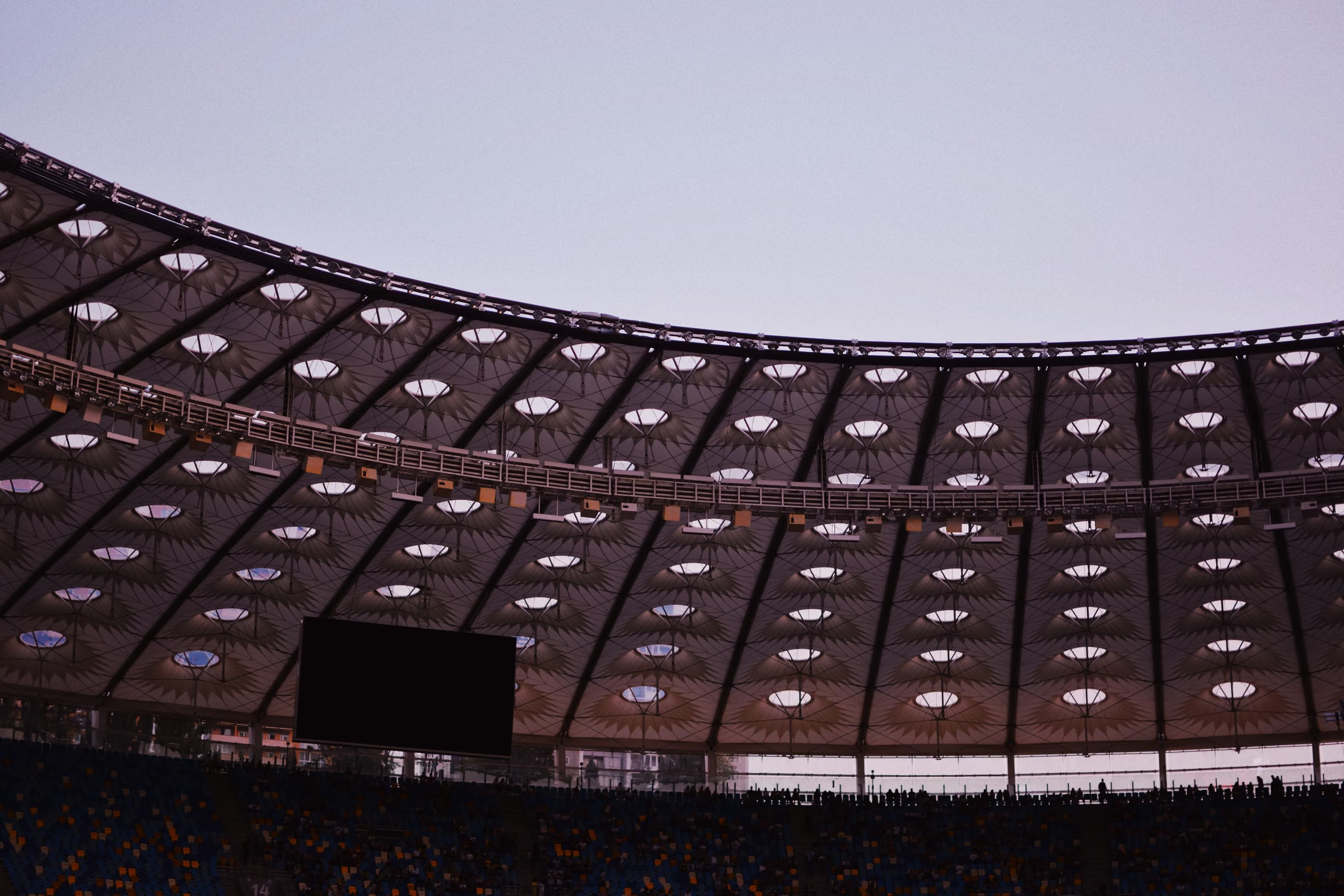
At the MLS Special Events Conference in Nashville, we shared a simple premise: the venues winning the next few years may be the ones that get more from what they’ve already built.
A stadium is a very expensive thing to let sit around waiting for kickoff, so why not embrace what else the building can do? A concourse can become media inventory. A plaza can become a community venue. An entrance can become a brand moment. And sometimes premium real estate creates more value by serving fans than by squeezing out one more transaction.
We broke down the opportunity into four practical ways venues can make the space they already have work harder.
1. Flex What You’ve Got
Venue design used to start with a fairly fixed question: What does this building do?
A more useful one now is: How many things can this building become?
Modular seating, movable stage decks, convertible sidelines and quick-turn surface protection can make a venue more adaptable without requiring a transformation system worthy of its own engineering documentary.
The principle is simple: build the bones so the building can flex to new functions.
That flexibility gives operators more ways to say yes to concerts, specialty sporting events, corporate programming, cultural moments and new forms of game day activation. The more configurations a venue can handle, the more useful the calendar becomes.
2. Give the Building a Side Hustle
Game days only fill part of the calendar. The rest of it is an opportunity.
Plazas, parking lots and surrounding districts can host community fitness, concerts, pop-up retail, farmers markets and watch parties tied to drafts, championships or All-Star weekends.
Our shorthand: low lift, high frequency, minimal shovels.
A recurring farmers market or watch party may be a simpler play than a major capital project, but it gives people a reason to come back on an otherwise quiet Wednesday. That creates more chances to sell, sponsor and program the property between matches, while opening up new spaces and moments for your broader sports marketing agenda to come to life.
3. Turn “Dead Space” Into Inventory
Once the calendar starts looking different, the building should, too.
Hallways, entrances, rooflines and other transitional zones are easy to treat as the spaces between the important stuff. Look again.
Little Caesars Arena has woven LED screens and sponsor builds throughout its concourse. At the 2026 NWSL Challenge Cup, e.l.f. turned arrival into the Match Day Carpet. Mercedes-Benz Stadium uses a 63,000-square-foot video ring around its retractable roof as premium media inventory.
The common move is simple: stop judging a space only by its original architectural purpose.
A walk from Point A to Point B can carry content. An entrance can become programming. Smart stadium concourse branding can turn circulation space into an experience people actually notice.
It is also a useful antidote to the kind of sports marketing innovation that looks impressive in a deck but does very little in the real world. Start with the space people already use, then make it work harder.
4. Let Some Square Footage Earn Loyalty
Working harder does not always mean earning more dollars per square foot.
Some spaces create value by making the venue more useful, welcoming or meaningful to fans: a gallery tied to the culture of the city, a museum worth visiting on an off day, a sensory room, a mother’s room.
GEODIS Park’s Soundwaves Gallery connects the stadium to Nashville’s music identity. Lambeau Field gives 15,000 square feet to the Packers Hall of Fame. Lincoln Financial Field turned suite-level real estate into the NFL’s first fully dedicated sensory room.
Those choices may not produce the neatest revenue line, but they can produce something harder to buy: loyalty.
Fan value is a KPI, too.
The Bigger Opportunity Is Already in the Building
All four ideas come back to the same shift in perspective. Flexibility creates more possible uses. Off-day programming creates more reasons to visit. Overlooked spaces create new inventory. Fan-first spaces create stronger relationships.
So before asking what to build next, walk the building you already have and ask better questions. What could move? What could happen here on a Tuesday? What are thousands of people already seeing that nobody is really using? Where could giving something back to fans create more long-term value than selling another square foot?
There is usually more opportunity hiding inside a venue than the floor plan lets on.
If you want to put any of these ideas into action, talk to our sports team. We’d be happy to explore how your venue can flex harder, work smarter and give fans more reasons to come back.




.avif)