In today’s event landscape, it’s not about being the loudest brand in the room—it’s about being the most intentional —experiential zones are quietly rewriting the playbook for modern brand experiences.
These purpose-built spaces are designed to do more than just impress—they’re engineered to connect, engage, and convert. One of the smartest trends we’re seeing across trade shows, events, and pop-ups is the rise of experiential zones—compact, high-impact areas that focus on delivering targeted, memorable interactions without needing to dominate an entire floor plan.
Why? Because in a world where attention spans are short, budgets are tight, and expectations are sky-high, experiential zones let you do more with less—and still walk away with real results.
What Is an Experiential Zone?
Think of an experiential zone as a brand’s highlight reel come to life. It's a focused area — sometimes just a few hundred square feet—designed to deliver a rich, layered brand experience. These spaces prioritize engagement, storytelling, and emotional connection over sheer scale.
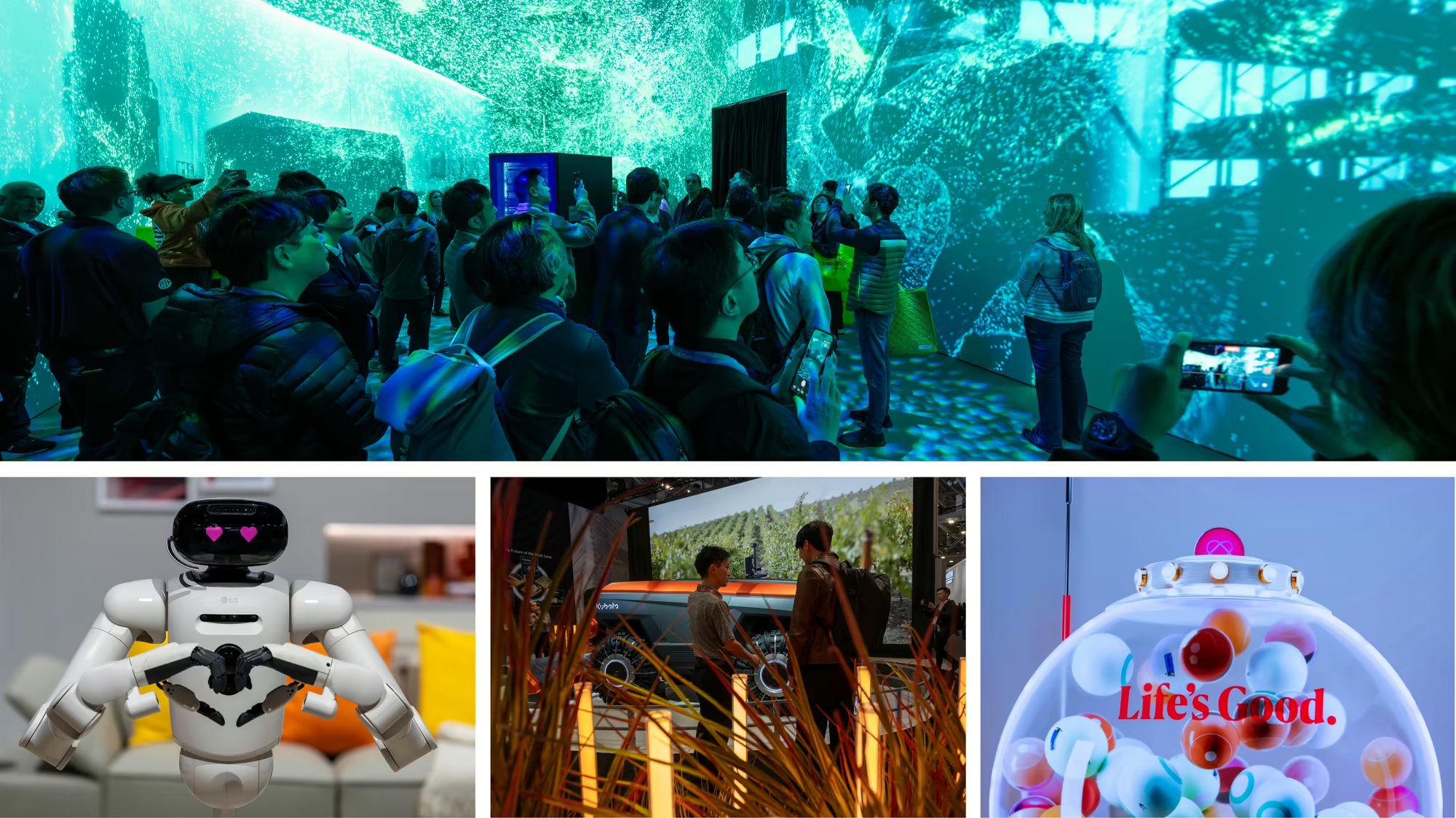
You’ve probably experienced one: a hands-on demo that draws a crowd, a cozy retreat inside a bustling trade show, a branded lounge that invites conversation and content creation. These zones are strategic, intentional, and adaptable.
Why They Work
1. They’re Agile (and That Matters)
Experiential zones are easier to plan, faster to build, and simpler to ship, especially when built with modular or reusable elements. That agility can make the difference between showing up on time—or not at all.
2. They Maximize Budget and ROI
With smaller real estate comes smarter spending. Brands can invest more into story-driven design, tactile moments, or interactive tech that creates a deeper connection with the audience. Plus, less space usually means fewer logistics, lower labor costs, and smaller carbon footprints (a win for your wallet and the planet).
3. They’re Audience-Centric
Experiential zones are built with the user's journey in mind. Brands can craft experiences that are more relevant and personalized—less wandering, more connecting. Whether it’s a guided tour, product try-on, or immersive storytelling wall, it’s all about making the moment memorable.
4. They Scale Across Touchpoints
One of the biggest perks of experiential zones is how easily they scale across multiple markets and event types. A thoughtfully designed zone can live at a conference one week, pop up at a retail store the next, and make an appearance at a mobile tour later in the season. That kind of repeatability means more impressions, more engagement, and more bang for your experiential buck.
How to Make Your Zone Work Harder
So, how do you design a small space that delivers a big impact? Here are a few rules of thumb:
- Tell one great story. Resist the urge to say everything. Focus on a single narrative or value proposition that can be explored in depth.
- Involve the senses. The most memorable experiences activate sight, sound, touch—even taste or smell. Don’t just inform—immerse.
- Design for dwell. Seating, shade, snacks—small touches that invite people to linger go a long way.
- Think social. These zones are ideal for content creation. Consider lighting, sightlines, and brand moments designed for sharing.
- Build for the future. Modular builds, lightweight materials, and smart shipping strategies make it easy to reuse and repurpose.
Real Talk: It’s Not a Compromise
Let’s be clear: experiential zones aren’t the consolation prize for not having a stadium-sized booth. They’re a strategic, audience-first approach to brand storytelling. One that just so happens to be more nimble, more sustainable, and often more effective.
In many cases, they outperform their larger counterparts because they’re focused, thoughtful, and human-scale. In a sea of spectacle, sometimes a well-crafted moment in a small footprint is what stands out the most.
So, if you're thinking about your next event presence, ask yourself: What could you do with a little less space—and a lot more intention? We have some ideas.