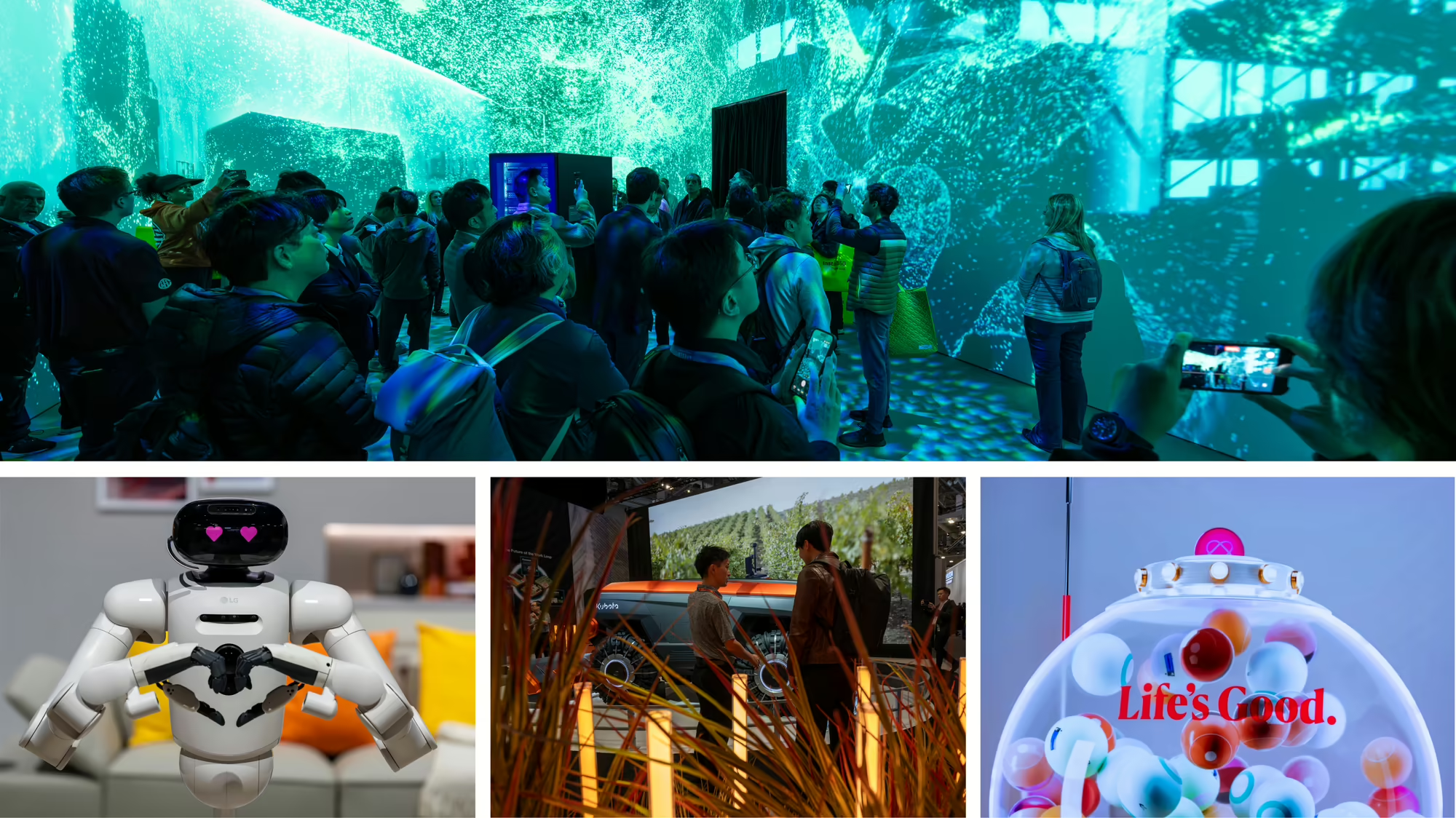
The best CES 2026 booths made technology easier to see, try and understand. LG turned a sprawling product ecosystem into a cohesive journey. Kubota made autonomous agriculture feel surprisingly human. And Clarios proved that a well-placed idea can hold its own against exhibits many times its size.
For brands preparing for CES 2027, these five exhibits offer practical lessons in getting attention and making something of it.
Three things the standouts had in common:
- A clear idea. Visitors could quickly understand what the brand wanted them to remember.
- Something to do. The best demonstrations made a promise tangible instead of merely describing it.
- A reason to stay. Story, space and interaction worked together to reward curiosity.
Five CES 2026 booth examples at a glance
- LG: Large-scale visual storytelling and an intuitive journey. BOSS Awards #2; EXHIBITOR Best of CES #3.
- Kubota: Hands-on agriculture technology grounded in real-world context. Multisensory innovation.
- Panasonic: Three focused content zones and sustainability in the build. BOSS Awards #5.
- Waymo: A striking suspended car plus accessible AI demonstrations. BOSS Awards #1.
- Clarios: A touch-activated installation explaining invisible power systems. BOSS Awards #8.
What made the best CES 2026 booths stand out?
Standout CES booths gave passersby an immediate reason to look, then delivered enough substance to turn curiosity into understanding. The formats varied, from enormous product environments to concentrated interactive exhibits. The underlying discipline was the same: make the technology matter to the person standing in front of it.
LG: Making a big impression with a bigger vision
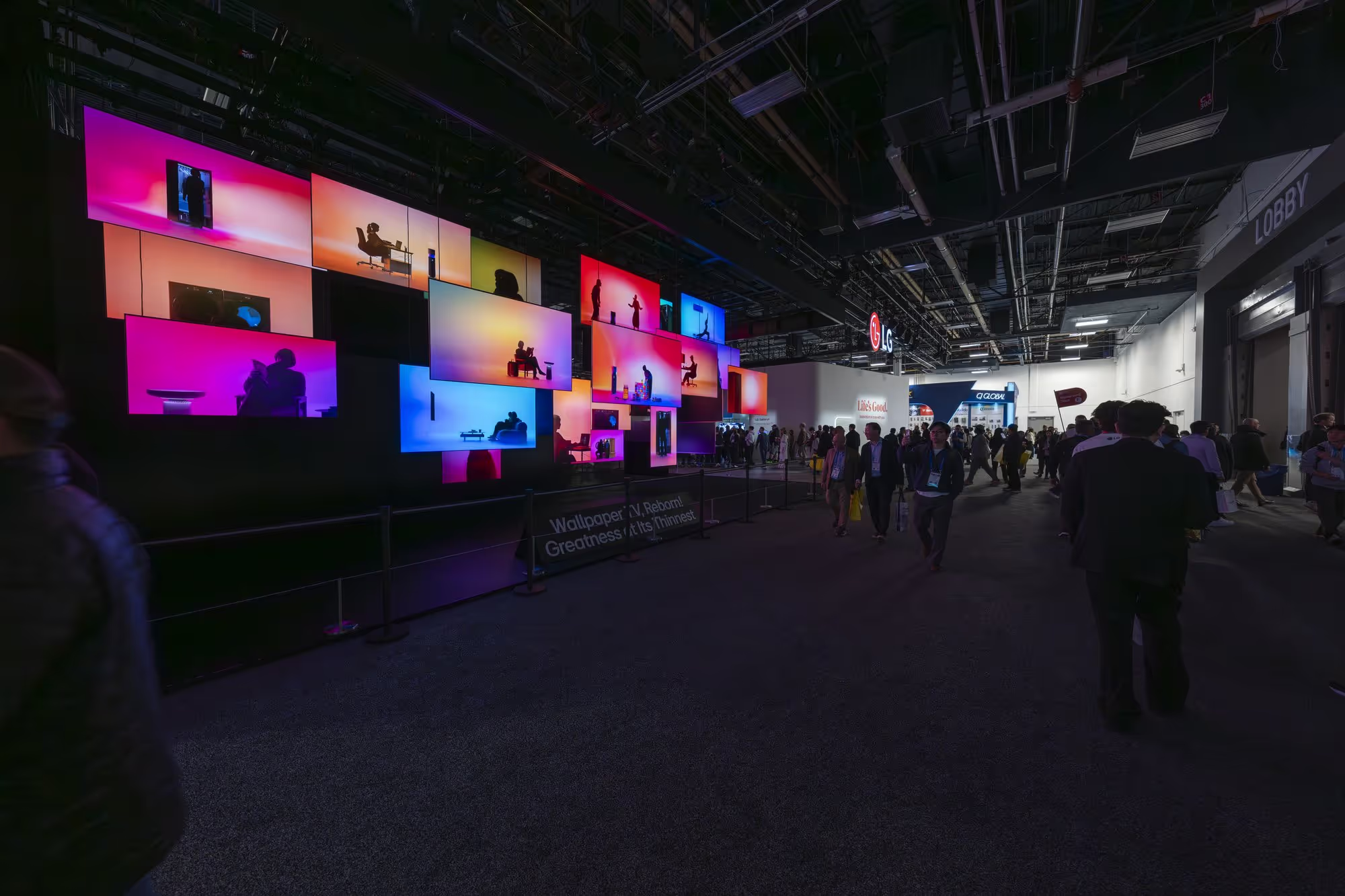
At 110 by 300 feet, LG had plenty of room to tell its story. It also had plenty of opportunities to lose the plot.
Instead, the CES 2026 exhibit moved visitors through a carefully orchestrated environment of floating displays, transparent OLED installations and AI lifestyle demonstrations. The dramatic entry brought people in; distinct product moments explained how LG's technologies fit together across everyday life.
Czarnowski Collective served as LG's fabrication and installation partner, turning LG's creative vision into a physical environment built to perform under CES conditions. That meant close coordination across engineering, technical planning and installation, with little room for surprises once the doors opened.
The exhibit placed second in the 2026 BOSS Awards and third in EXHIBITOR Magazine's Best of CES rankings. Those honors recognized the exhibit experience itself, separate from the 139-plus product awards and accolades LG reported at the show.
The lesson: Big creative ambition needs equally good execution. Explore LG's CES 2026 case study.
Kubota: Bringing the future of farming down to earth
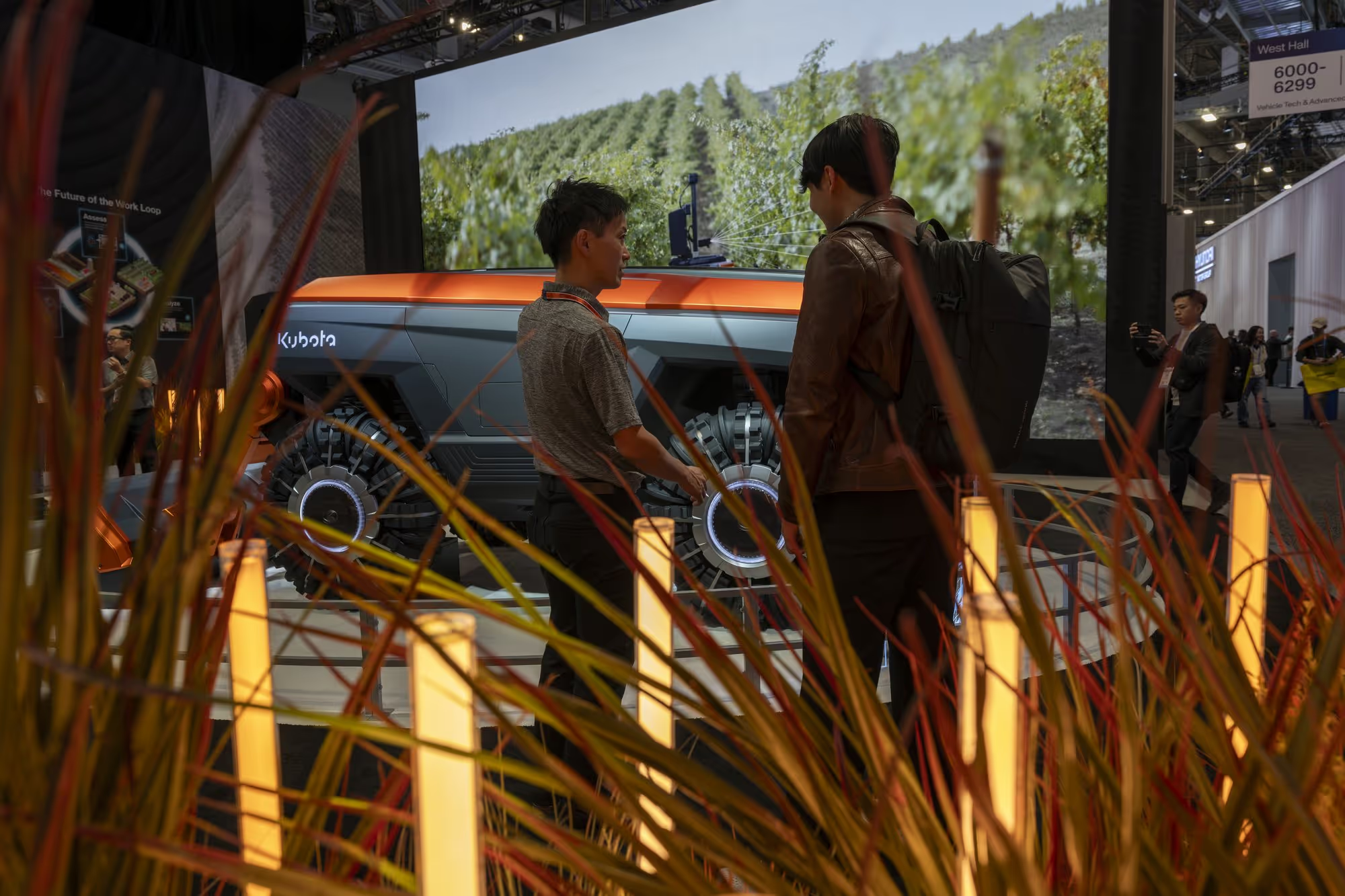
A commercial autonomous tractor. A shape-shifting concept robot. A Digital Twin table that invited visitors to explore smart agricultural systems for themselves. Kubota came to CES with plenty of futuristic hardware, but its exhibit made the technology feel connected to familiar work.
Developed with Czarnowski Collective, the experience moved visitors from the rhythms of the field toward a more automated future. Footage from Napa and Japan, natural materials and the scents of grass and soil reinforced the human side of the story. Meanwhile, hands-on interfaces and live equipment put the innovations in context.
It was a smart match of message and medium. Kubota could talk about technology supporting a farmer's expertise, then let visitors see that relationship in action.
The lesson: A strong demonstration answers the question "What does this actually do for me?" See the full Kubota CES 2026 case study.
Panasonic: Giving a complex portfolio one coherent story
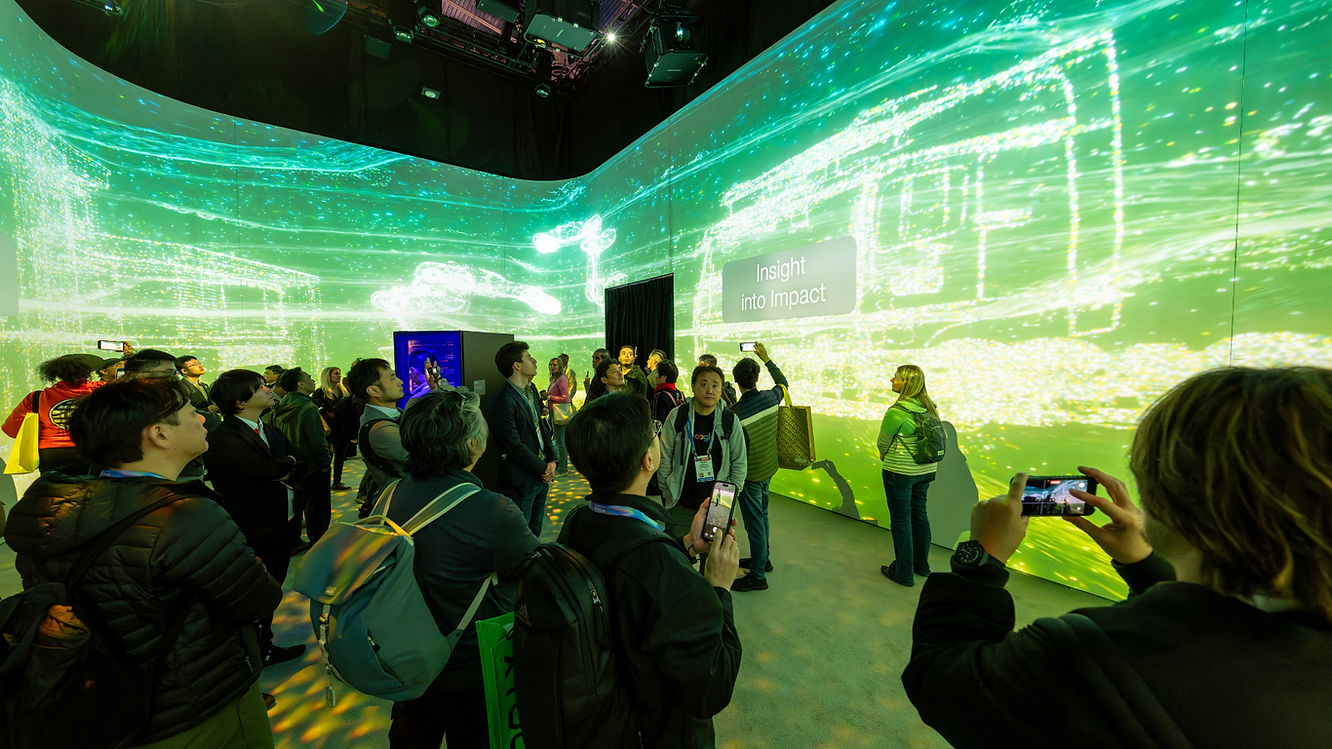
Panasonic had the challenge of presenting technologies spanning data center infrastructure, AI-powered supply chains and next-generation energy solutions. That is a lot to ask of one visitor journey. The CES 2026 exhibit gave it a clear beginning, middle and room for exploration.
Guests started with an immersive introductory film before entering three content-rich zones. Live demonstrations and layered messaging let attendees choose how deeply to engage with each subject. Repurposed exhibit materials also brought Panasonic's sustainability priorities into the construction itself.
Czarnowski Collective collaborated on design and handled fabrication and installation. The exhibit ranked fifth in the 2026 BOSS Awards, with judges highlighting its orderly storytelling and polished execution.
The lesson: When you have a lot to say, give every message an intentional place. See how that intentionality has informed Panasonic's CES booth design for years by exploring Czarnowski Collective's 2023 Panasonic case study.
Waymo: Stopping traffic with a car that went nowhere
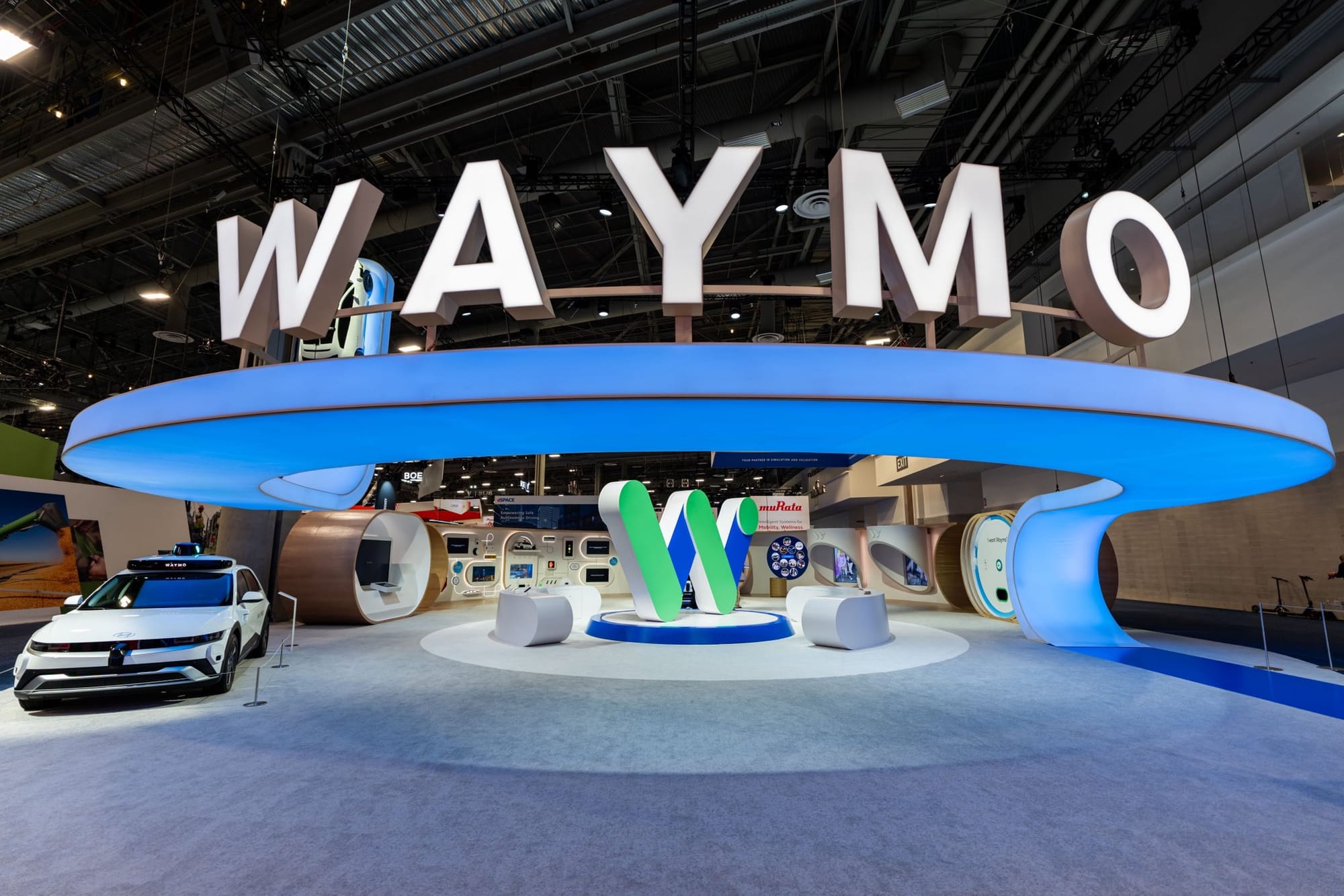
Waymo took a familiar object, a car, and put it somewhere nobody expected: suspended above the exhibit. The 7,000-square-foot booth's eye-catching installation, with a 600-pound vehicle seemingly floating in midair, gave passersby an immediate reason to stop.
The rest of the experience gave them a reason to learn. Interactive maps, AI-driving demonstrations and rider stories explained autonomous mobility in a language visitors could understand. A backseat photo experience made the promise of a future Waymo ride feel a little closer.
Designed by NVE Experience Agency, with fabrication credited to DreamCraft in the BOSS Awards, the exhibit won first place in that competition and topped EXHIBITOR Magazine's Best of CES list.
The lesson: A spectacular first impression works harder when it leads to a useful second impression. See the official BOSS Awards review.
Clarios: Making invisible technology impossible to miss
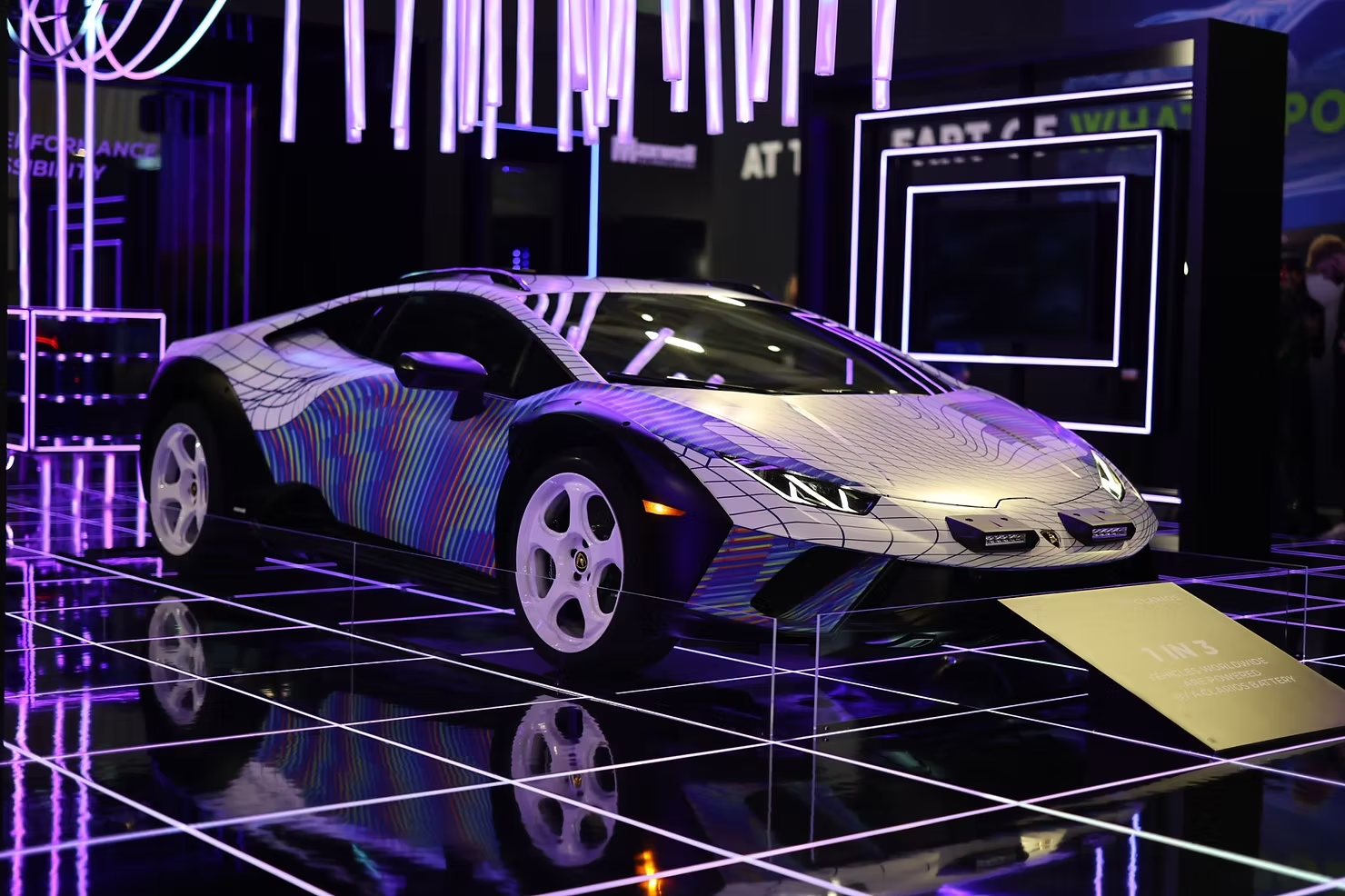
Clarios faced a particularly tricky CES challenge: how do you make low-voltage power management feel exciting? Its 30-by-50-foot exhibit answered with a dramatic display of light, motion and interaction.
The centerpiece was a touch-activated Battery Monolith. When visitors made contact, the installation set off a coordinated lighting sequence that visualized how the Clarios Power Management System works across generation, conversion, distribution, stabilization and monitoring. More than 4,000 feet of LED strips helped turn an otherwise abstract system into something visitors could experience.
Designed by Iris North America and Vok Dams, and fabricated and installed by DreamCraft, the exhibit placed eighth in the 2026 BOSS Awards. At 1,500 square feet, it was roughly one twenty-second the size of LG's booth. It still had a clear hook and a compelling reason to engage.
The lesson: A smaller footprint can make a big impression when the interaction does the explaining. Read the BOSS Awards assessment.
What can previous CES exhibits teach us about trade show trends?
Several of the strongest approaches at CES 2026 had been gaining momentum for years: making AI relatable, using physical environments to tell complex stories and creating more opportunities to participate.
-11.avif)
LG's CES 2025 exhibit organized AI-powered living around the different times of day, giving its large portfolio a human-centered narrative. It went on to take first place in the 2025 BOSS Awards.
Kubota's CES 2025 booth brought agriculture into the hall with multisensory storytelling, 170 feet of LED displays and technology demonstrations. Its case study reports 23,000 visitors and 93% positive guest survey ratings.
Panasonic's CES 2023 experience divided a 16,000-square-foot exhibit into four connected zones built around its sustainability and technology story. And USPS at CES 2023 used games and an electric delivery vehicle to bring network modernization to life; its two games recorded 3,624 plays.
Taken together, these examples point to a durable trade show trend: the most useful exhibit technology helps visitors understand or experience something. A screen, robot or game earns its place when it moves the brand story forward.
What should brands planning CES 2027 take away?
The most effective CES 2027 planning starts with the audience, the business objective and the experience that connects them. Five questions can help focus the brief:
- What should people remember? Choose one clear idea that organizes the experience.
- What will make them stop? Create a compelling invitation that reads quickly from the aisle.
- What can they try? Demonstrate the product promise whenever possible.
- What happens next? Plan for qualified conversations, follow-up and continued engagement.
- How will you know it worked? Define useful measures such as leads, meetings, dwell time, perception or cost per show before design begins.
Answer those five questions early, and the rest of your CES booth design starts to take shape: the footprint, the demonstrations, the staffing and the story visitors take with them. It's the same thinking behind every trade show exhibit we design and build, at CES and beyond.
Planning for CES 2027? Explore our CES page for practical planning guidance, then schedule time with our CES team to talk about your project.